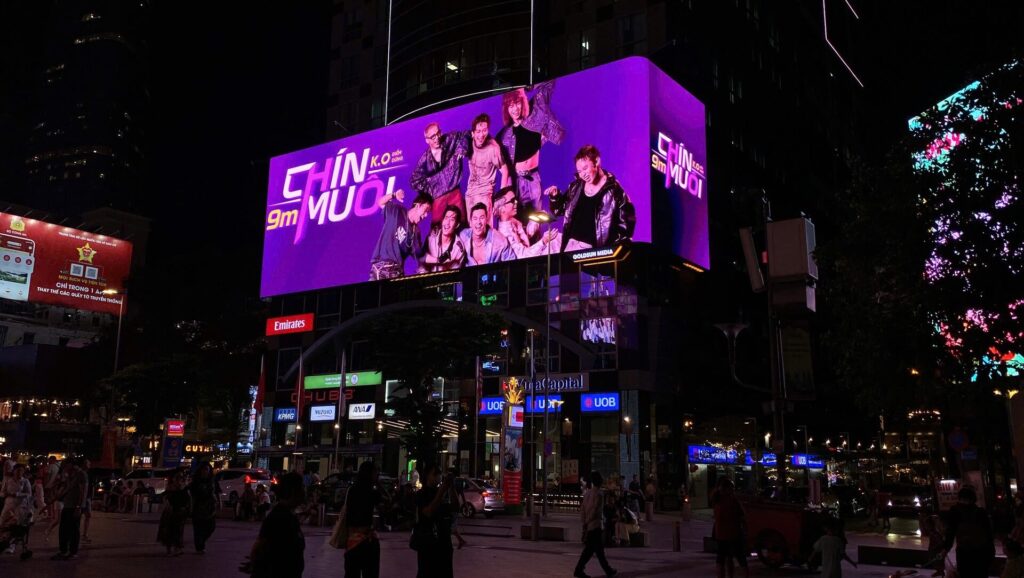


From concerts and fandoms to community sports and viral social media moments, 2026 highlights a notable shift in out-of-home advertising: screens are no longer just display surfaces, but are becoming part of the events, experiences, and cultural conversations unfolding in the real world.
According to YouNet Media, Vietnam’s entertainment market saw a boom in 105 entertainment programs over the 18-month period from early 2025 through June 2026. The first half of 2026 alone recorded 51 shows, a 50% increase year-on-year.
This boom is reflected not only in the number of events, but also in how they are transforming OOH/DOOH from static advertising placements into “content engines.” In 2026, OOH is no longer just a backdrop along the roadside. It has evolved into a driving force behind cultural conversations and a key link throughout the lifecycle of real-world events.
From “Advertising Placement” to “Fandom Destination”
Previously, businesses used OOH for celebrity endorsement, leveraging artists’ faces to lend credibility to their brands. By 2026, this approach has shifted toward turning LED screens into destinations in their own right.
Modern fandoms do more than consume content; they “live” alongside their idols through rituals such as ticket hunting, check-ins, creating fancams, and organizing fan projects. A notable example is Spotify’s campaign for Taylor Swift’s album The Life of a Showgirl (2025). At Times Square, a minimalist billboard featuring only a Spotify Code appeared at precisely 12:12 a.m. on August 12. Thousands of fans immediately flocked to scan the code and search for clues, turning the campaign into a fandom experience that connected the physical space with playlists and social conversations.
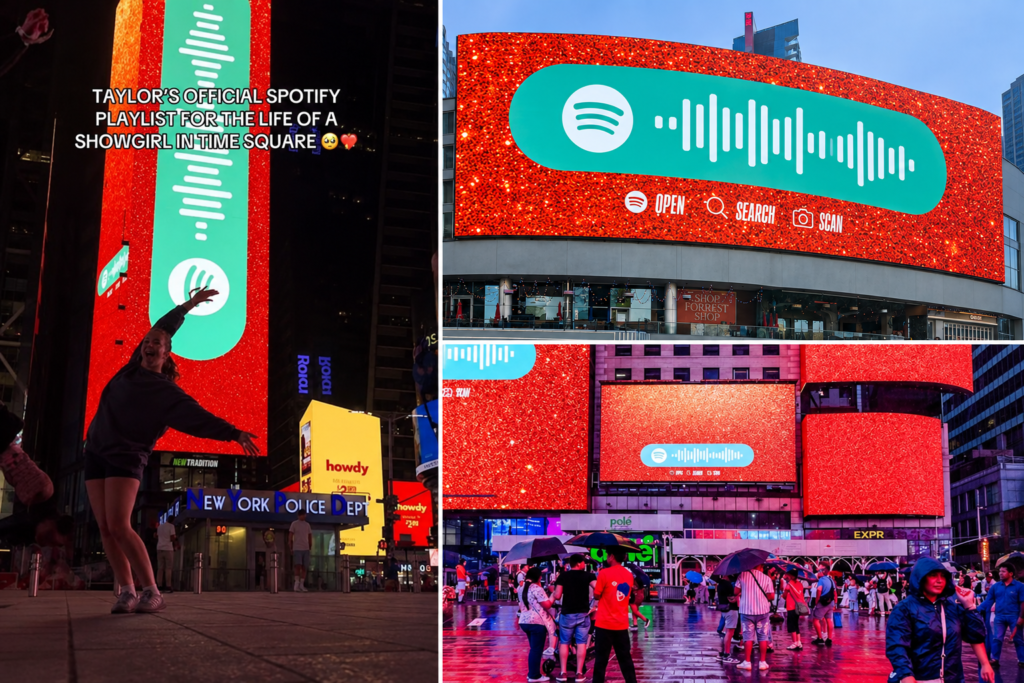
This is when a billboard transforms from an advertising placement into a gathering point for the community. Media value is no longer measured solely by incidental foot traffic, but also by whether fans actively seek out the screen to take photos and amplify the physical touchpoint across digital platforms.
Visual Spectacle: When Cultural Heritage Becomes Contemporary Visual Content
Another trend becoming increasingly evident in 2026 is the way local culture is moving beyond museums and entering contemporary entertainment through fashion, music, tourism, and social media.
3D anamorphic and hologram technologies have transformed DOOH into immersive visual experiences that celebrate culture, where cultural content and traditional architecture are reimagined through modern motion graphics.
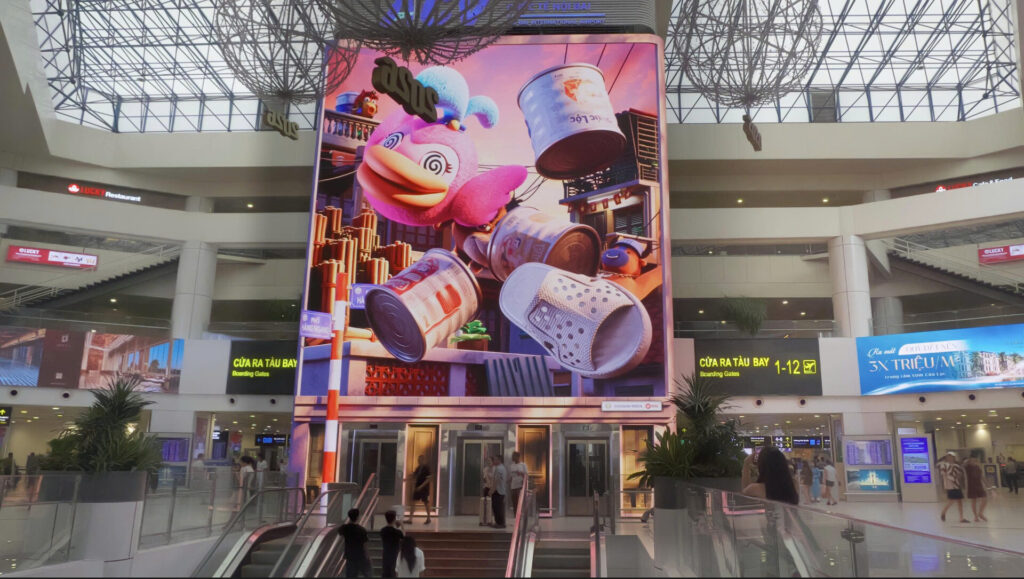
Don’t just place content in the city; let the city become part of the content. When heritage is brought to life through technology in public spaces, DOOH evolves into a visual stage and an integral part of the cultural narrative. However, brands must remain mindful that technological appeal cannot replace an understanding of local culture. The difference between a campaign that is merely “visually striking” and one that offers a “meaningful experience” lies in the brand’s ability to ensure cultural accuracy.
Community Sports: From Advertising to Celebrating Shared Emotions
Sports is another area where the evolution of OOH is clearly evident. For years, sports advertising typically revolved around player key visuals, sponsor logos, or tournament countdowns. In 2026, the development of DOOH and dynamic content allows brands to go further by becoming part of the action as it unfolds.
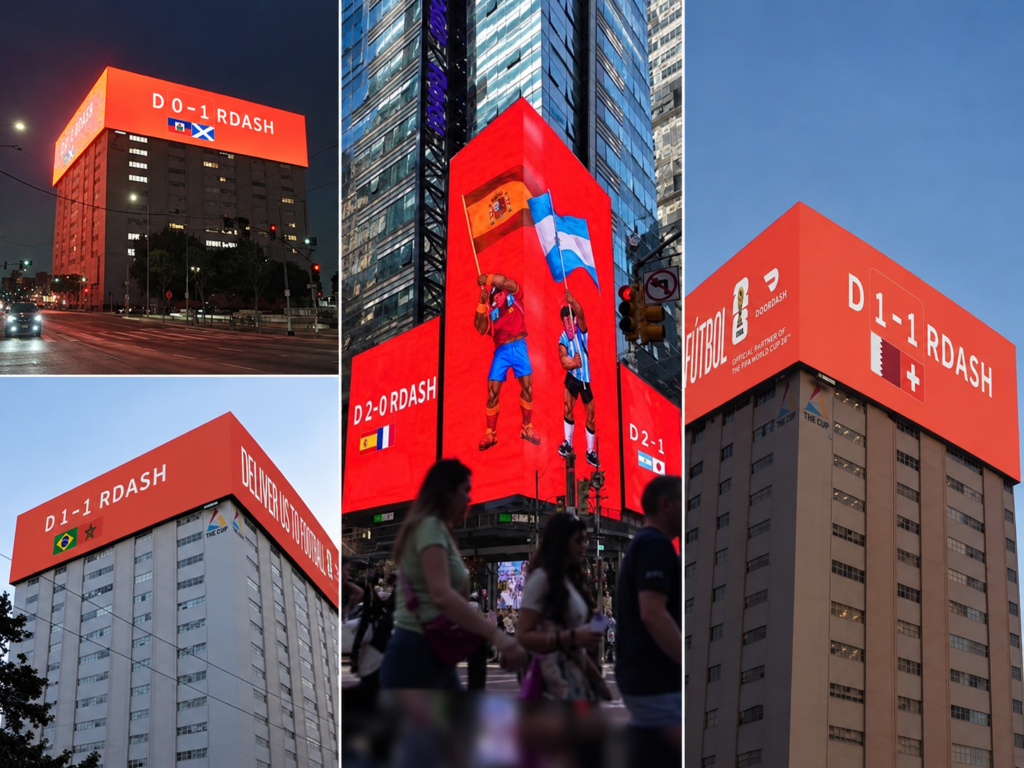
During the 2026 FIFA World Cup, DoorDash surprised audiences by turning its brand logos across major cities into real-time scoreboards. Passersby looked at the screens because they “needed information,” not because they “had to watch an ad.” When media becomes useful in the context of the moment, advertising feels far less intrusive.
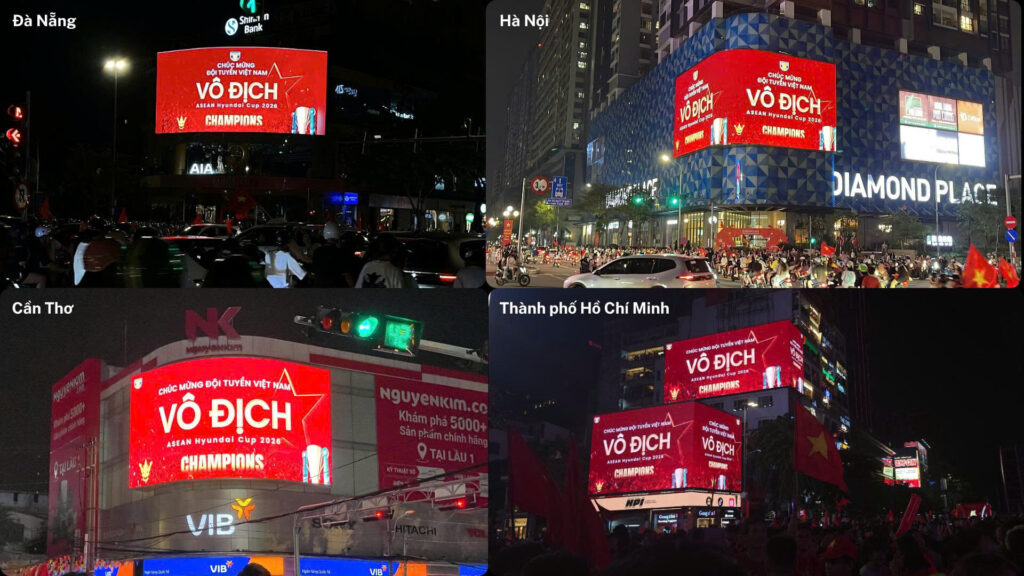
At the 2026 ASEAN Cup, immediately after the final match ended, Goldsun Media displayed a congratulatory message to the champions across its nationwide DOOH network, turning advertising screens into part of the street celebrations.
Online to Offline to Online (O2O2O): Billboards Become Part of the Customer Journey
The growth of smartphone use and digital advertising is also changing how OOH effectiveness is measured. According to a 2026 survey conducted by Goldsun Media in collaboration with Cốc Cốc, 78% of respondents who paid attention to OOH/DOOH said they had searched for more information after seeing an outdoor advertisement. Of these, 62% used search engines, 44% searched on social media, 40% visited e-commerce platforms, and 25% scanned QR codes.
These figures highlight an important point: QR codes are not the only way to connect offline and online experiences (O2O), and the value of OOH lies in its ability to trigger consumer behavior.
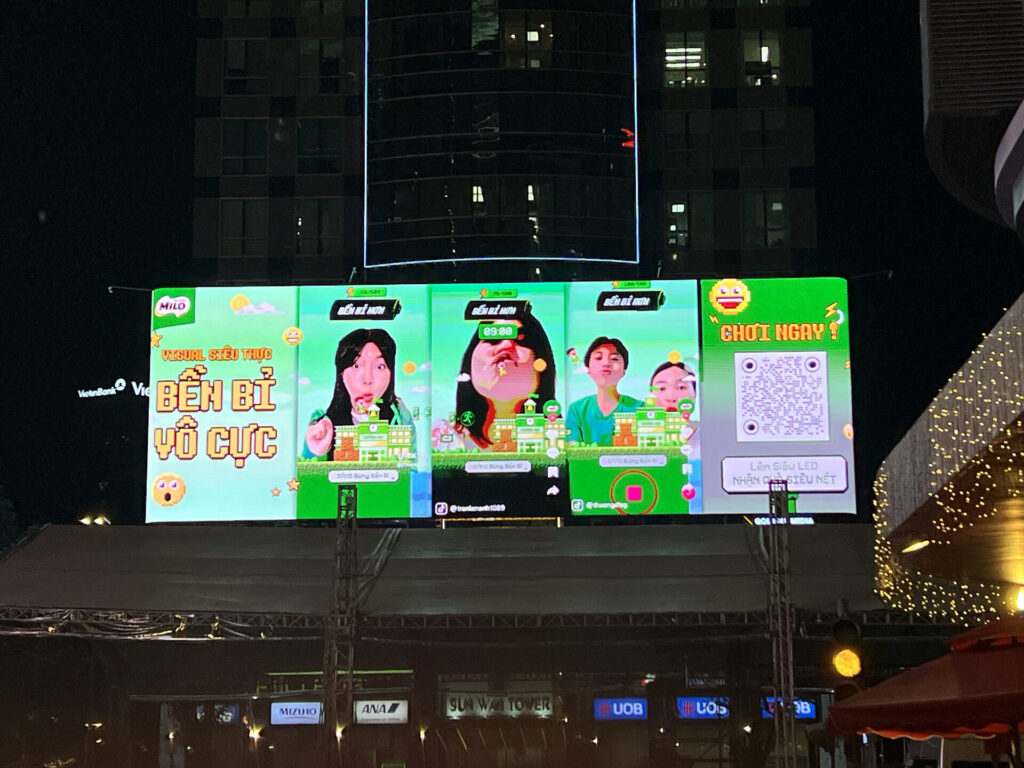
Consumers may see a billboard, remember a brand name, and search for it on Google, TikTok, or Shopee just minutes later. In the other direction, social content can also move into the physical world. MILO once brought videos from a TikTok challenge to the LED screen on Nguyễn Huệ Street. The challenge generated more than 1.3 million plays and 9,000 videos, with OOH serving as a “visible reward” that motivated the community to keep creating and sharing content.
Conclusion
All these trends converge around one core concept: Event-driven Marketing. In this approach, OOH is no longer an independent channel but plays an important role throughout the entire lifecycle of an event.
An event no longer takes place over just one day. It begins with teasers, builds anticipation and FOMO, peaks with the live experience, and continues through UGC, recaps, and community engagement. OOH/DOOH can play a role at every stage. Before the event, screens build curiosity. During the event, they become check-in destinations and real-time communication channels. After the event, they can amplify content created by the community itself.
That is why, in the future, an outdoor screen may be evaluated not only by its traffic or number of ad spots, but also by its ability to drive Search, Scan, Shoot, Share, and Show-up.
Perhaps that is why the key questions for OOH/DOOH in the next phase will go beyond “How many people see the screen?” to include: “At what moment does the screen appear, which community does it reach, and what will viewers do next?” Or, “What is compelling enough to make audiences stop, take out their phones, and continue telling the brand’s story?”