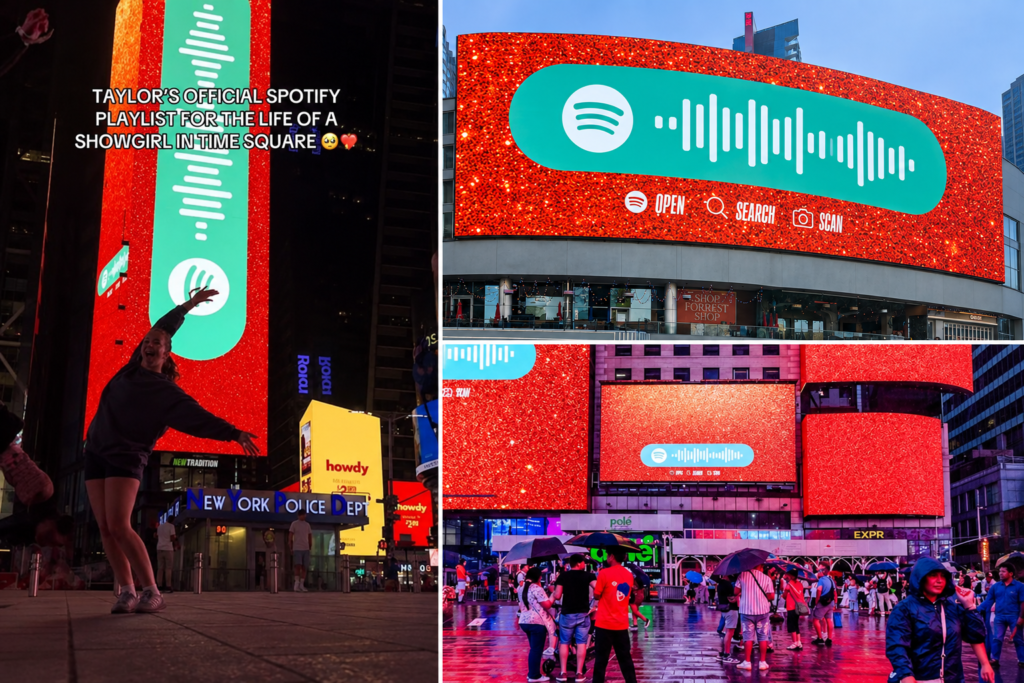


From direct responses on billboards to “ambush” campaigns at competitors’ touchpoints, brand wars are becoming a battleground where brand strategy, creativity, and speed of response converge. OOH plays a distinctive role in this dynamic, turning competition that would otherwise unfold on digital screens into a tangible experience in the public eye.
1. The Art of Brand Wars and the Shift in Share of Voice
Why do we tend to remember the “trolling” exchanges between Samsung and Apple more than dry technical specifications such as screen resolution or processor speed? In a world saturated with information noise, keeping a brand distinctive requires bolder strategies than traditional advertising. The winner is not necessarily the one with the best product, but the one that knows how to capture the most attention. From a strategic perspective, brand wars are more than direct confrontations; they are calculated moves designed to reposition competitors and reinforce a brand’s distinct identity.
According to an Oracle survey, 91% of consumers prefer brands with a sense of humor, while 80% are willing to return to brands that create an emotional connection with them. Taking jabs at competitors is more than just entertainment; it is a way for brands to establish a strong point of differentiation, stay top of mind, and reinforce their leadership position. By leveraging positioning gaps, brands turn contrast into a strategic weapon to assert their identity.
2. Case Study: Samsung vs. Apple – The Art of Ambush Marketing
The rivalry between Samsung and Apple has entered a new and dramatic phase as Apple officially launches the iPhone Duo, its first foldable phone, priced at $1,999. This marks an opportunity for Samsung to deploy a contextual ambush strategy, leveraging its seven years of experience as a pioneer in the foldable phone market.
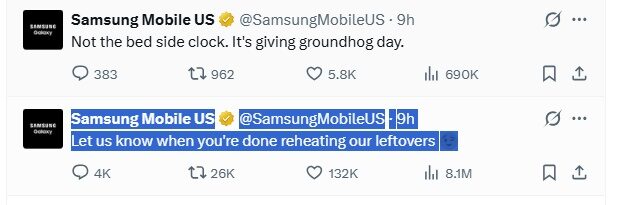
Just minutes after Apple introduced the iPhone Duo, Samsung Mobile US posted a series of jabs at its rival on X, generating significant engagement.
Within one week, Samsung’s posts on X had surpassed 14 million views, sparking widespread discussion about who truly leads in technological innovation.
OOH as a “Weapon”: Striking at Physical Touchpoints
Samsung took the rivalry beyond the digital space, securing some of the most premium outdoor advertising locations to create a direct confrontation. The brand launched its “Welcome to Foldables” OOH campaign, featuring LED screens installed along major streets and in prominent public squares across key cities:
- New York: Times Square
- London: Piccadilly Circus and Outernet
- Tokyo: Ga Shibuya
- Seoul: COEX K-POP LIVE and KT Square
- Ho Chi Minh City: Nguyen Hue Walking Street
With this message, Samsung reinforces its position as a pioneer, emphasizing that foldable phones are a market it has been part of for years.
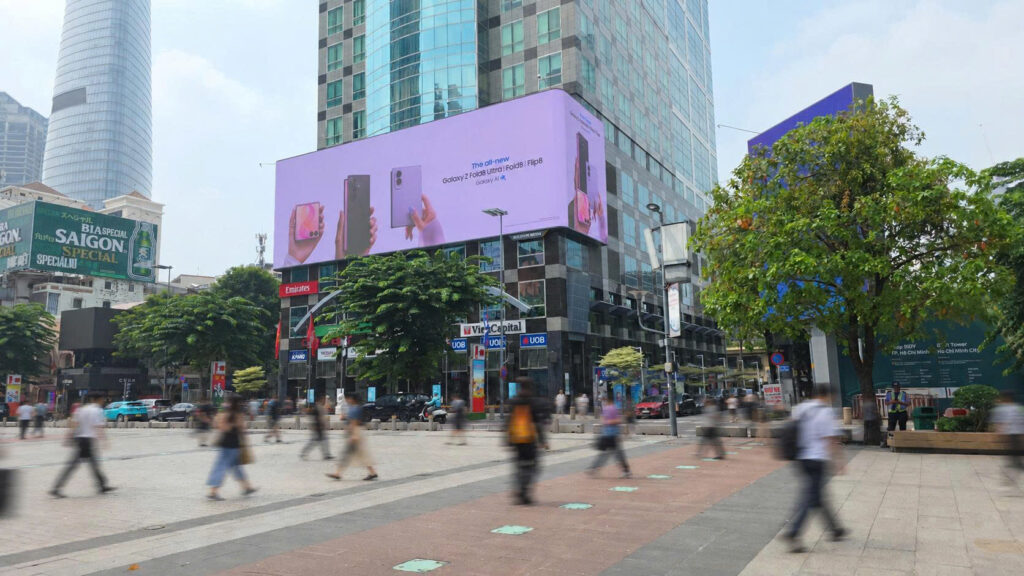
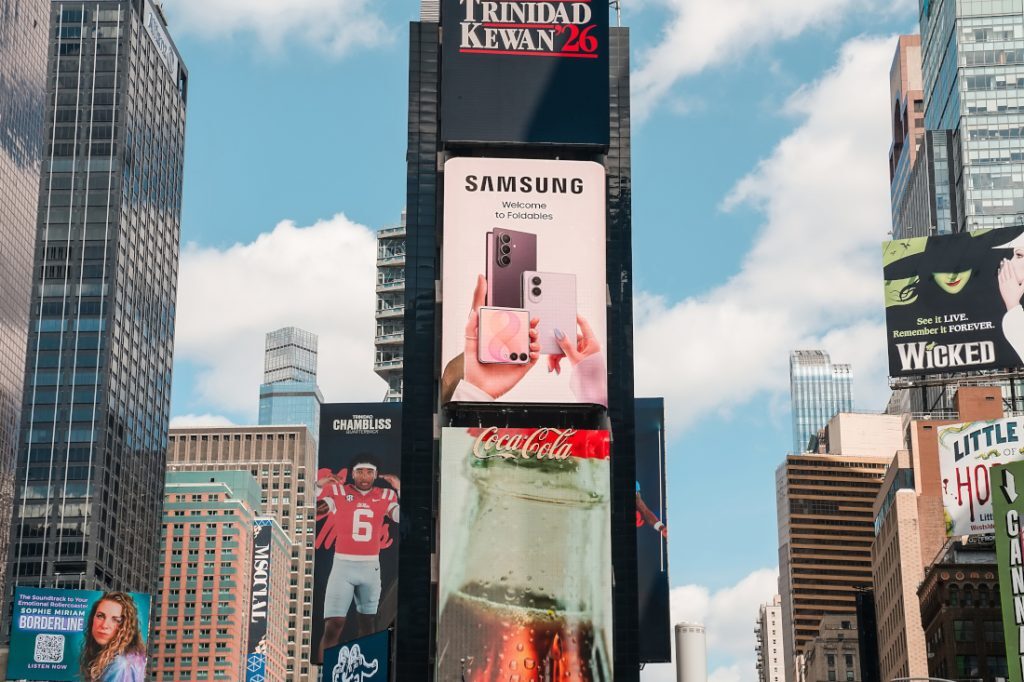
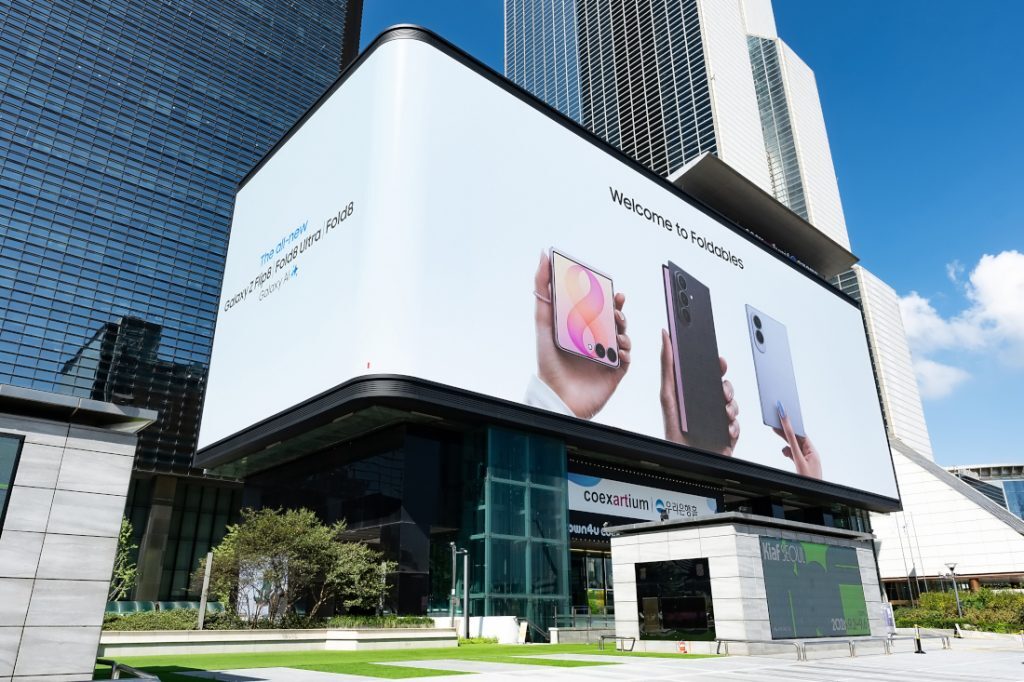
Samsung’s “Welcome to Foldables” OOH Campaign in New York, Seoul, Tokyo, London, and Ho Chi Minh City
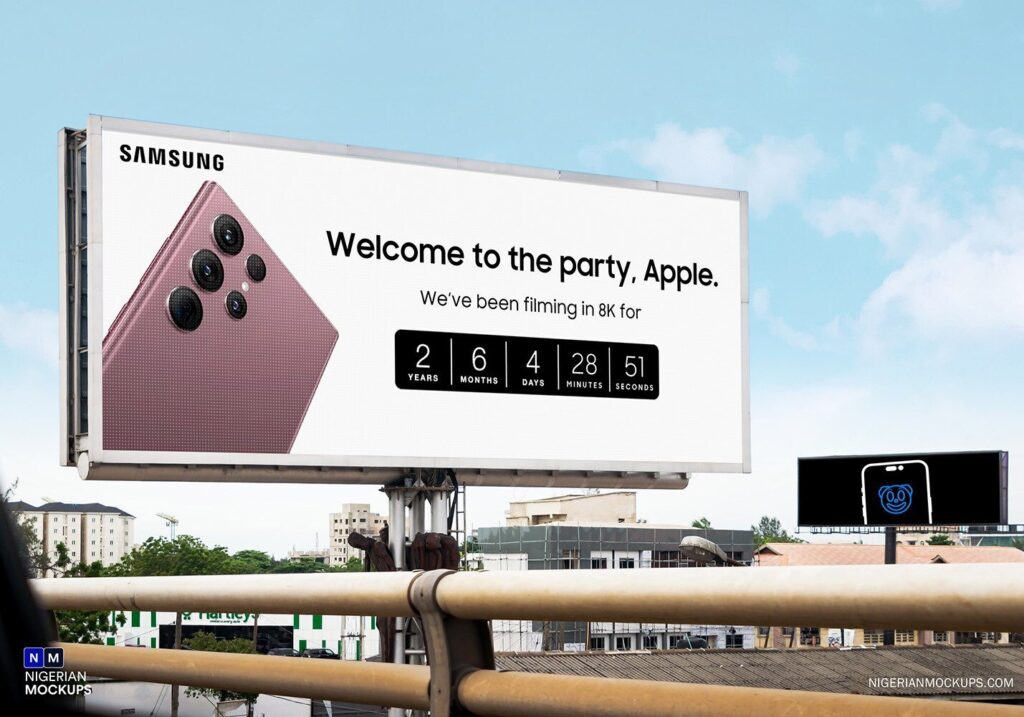
This was not the first time Samsung had used OOH to execute its ambush marketing campaigns. In 2022, the brand launched a large-scale OOH campaign featuring digital countdown clocks installed right next to or across from Apple Stores. A giant image of the Galaxy Z Fold8 appeared before customers waiting in line, accompanied by a provocative message.
3. Iconic Ad Wars and the Evolution of Competitive Advertising Tactics
Competitive advertising is a widely used tool for shaping brand identity and driving business performance.
- BMW vs. Audi
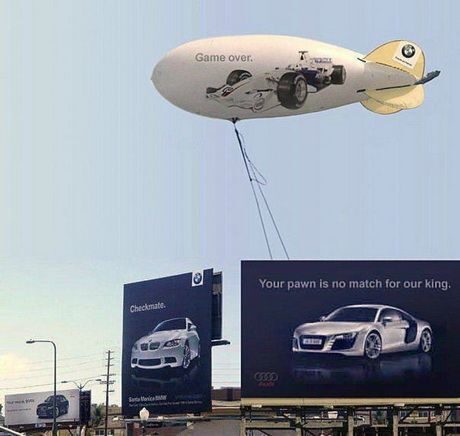
This rivalry is a classic example of how OOH can turn advertising into a public conversation. When Audi kicked things off with a billboard reading “Your Move, BMW,” the Bavarian automaker retaliated with an even larger billboard right next to it, bearing the words “Checkmate.” The rivalry reached its climax when BMW used an airship carrying the message “Game Over” to assert its position against its competitor.
- Pepsi vs. Coca-Cola
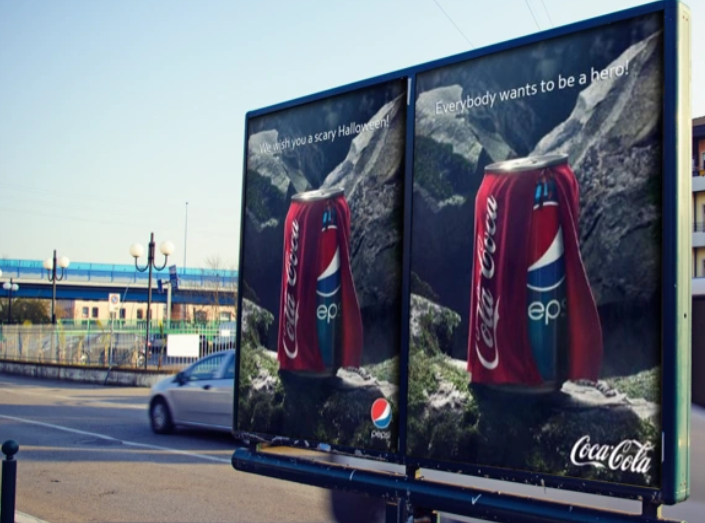
Pepsi is well known for its Halloween campaign featuring a Pepsi can dressed in a Coca-Cola-branded cape. Notably, a taste challenge held in Atlanta, Coca-Cola’s hometown, in 2025 helped drive a 25% increase in Pepsi Zero Sugar sales, demonstrating how well-timed provocation can significantly shift market share.
- McDonald’s vs. Burger King
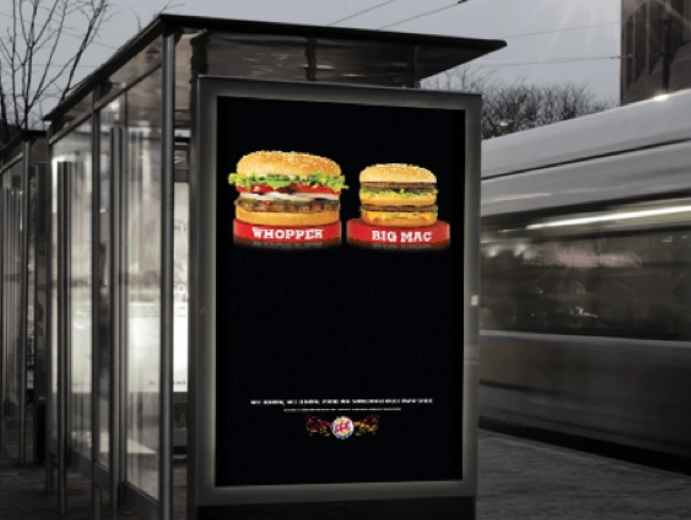
The two global fast-food giants, McDonald’s and Burger King, are also well known for taking playful jabs at each other. In 2007, Burger King launched the “Whopper vs Big Mac” campaign, using a simple yet striking visual: a Burger King Whopper displayed on a larger pedestal than its rival, the Big Mac, to emphasize the superior size of its product.
4. The Strategic Role of OOH: A Physical Anchor for Social Media Engagement
In the digital era, OOH remains a weapon of choice for strategic masterminds, thanks to its unique advantages:
- Unignorable Physical Presence: Placing a giant billboard or LED screen directly in front of a competitor’s store creates a physical confrontation. It forces customers to confront the contrast at the point of purchase in a way that digital algorithms cannot replicate.
- Physicality as Proof: A real-world OOH installation is a “bold move” by a brand. When Samsung installed a billboard featuring a countdown clock in London, it served as undeniable proof of the brand’s confidence. Users who photograph it and share it on platforms such as Facebook, X, and Instagram create a social media loop. This physical presence acts as a catalyst for user-generated content (UGC), delivering stronger ROI.
- Asserting Brand Dominance: OOH placements at iconic locations allow brands to assert their position and pride, turning satirical messages into powerful brand statements.
5. Conclusion
Brand wars are not simply about undermining competitors or winning short-term sales battles; they are about image, emotion, and long-term loyalty. Their true value lies in the ability to build lasting connections through audience engagement and emotion. Leading brands understand that while a good product can drive sales, a clear and distinctive brand personality is what turns customers into loyal advocates.
Ultimately, in the battle of giants, the true winner is the brand that knows how to turn competition into a source of creative inspiration and stronger consumer connections.
Key Strategic Takeaways for Competitive Advertising Campaigns:
- Leverage Cultural Moments: Respond quickly when competitors make a misstep or launch a new product to maximize Share of Voice.
- Choose Locations That Drive Digital Engagement: Use OOH placements in strategic locations near competitors as a physical trigger, then leverage social media to generate organic viral buzz.
- Legal and Ethical Boundaries: Provocative messaging must be grounded in the product’s actual strengths and comply with legal requirements to protect long-term brand value.