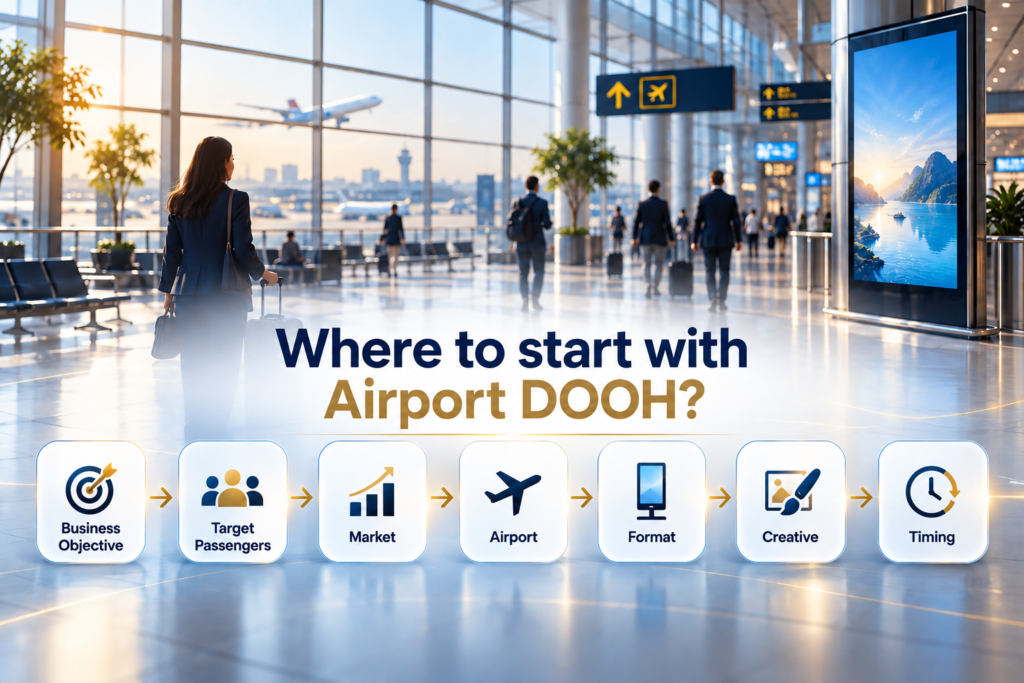
The answer is not necessarily to choose the largest screen or the most prominent location right away. An effective Airport DOOH plan should begin with business objectives, identifying the right passenger segments and target markets before moving on to airport selection, advertising formats, creative content, and campaign timing.
Start with Objectives, Not Inventory
Before selecting advertising locations, brands need to clearly define what their campaigns aim to achieve: increasing brand awareness, launching new products, building a premium brand image, creating a strong presence during a key communication period, or maintaining long-term visibility.
Each objective calls for a different approach to Airport DOOH. A product launch campaign may require large-format screens to create immediate visual impact, while a long-term branding campaign may benefit from combining prominent display locations with a network that delivers high exposure frequency.
Therefore, the first question should not be “Which screen should we book?” but rather “What does the brand need to achieve by advertising at the airport?”
Audience: Who Does the Brand Want to Reach?
After defining objectives comes the question of audience. Airport passengers are not a homogeneous group. Business travelers, tourists, families, high-income travelers, and frequent flyers have different behaviors, dwell times, and levels of attention.
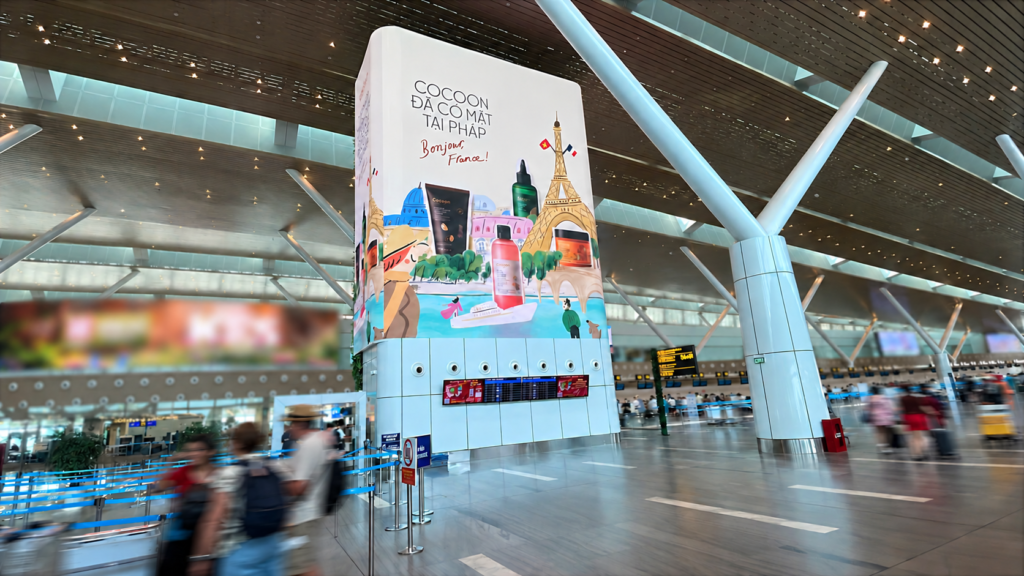
Identifying the right audience helps brands determine where they should appear along the passenger journey: at check-in areas to create an immediate impression, in waiting areas to take advantage of longer exposure times, or along high-traffic routes to increase frequency.
This also provides the basis for deciding whether to focus on a single airport or build coverage across multiple markets.
Market: How Broad Should the Brand’s Reach Be?
For brands operating nationwide, the next question is which markets should be prioritized.
Hanoi and Ho Chi Minh City are not only two major consumer markets but also important aviation hubs. Therefore, rather than treating advertising at Noi Bai and Tan Son Nhat as two independent plans, brands can incorporate both into a unified strategy.
A campaign running simultaneously at these two aviation gateways helps create visual continuity between the two economic centers while expanding opportunities to reach consumers traveling between cities.
Particularly for nationwide campaigns, new product launches, and brands in sectors such as finance, technology, automotive, tourism, and luxury goods, connecting multiple airport touchpoints can help maintain a consistent brand presence throughout the passenger journey.
Airport: Choose Airports Based on Their Role in the Campaign
Once the objectives, audience, and target markets have been clearly defined, airport selection becomes more specific.
Noi Bai can serve as a high-impact touchpoint in the Northern market, while Terminal T3 at Tan Son Nhat can extend brand presence at a major aviation hub in Southern Vietnam.
However, a two-airport strategy does not necessarily require identical advertising formats at both locations. Instead, effectiveness comes from making the most of each environment’s distinctive characteristics.
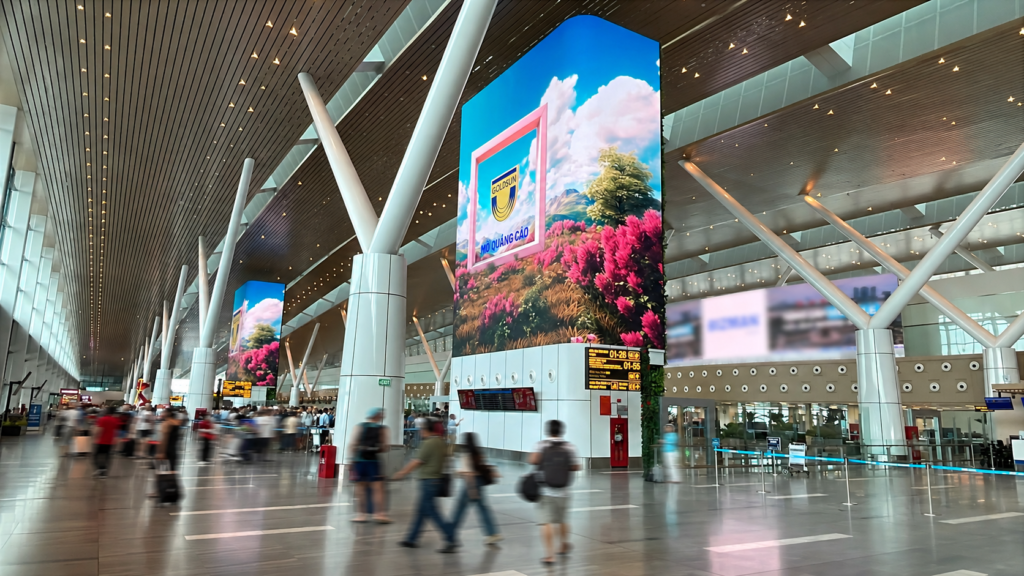
This is also how Goldsun Media has developed its Media Tower network at the two airports: both are designed to deliver strong visual impact, but each is tailored to the architecture and passenger flow of its respective terminal.
Format: Different Spaces Require Different Approaches to Creating Impact
As media formats change, creative content must adapt accordingly. For the Noi Bai Media Tower, the vertical display format creates opportunities for content featuring vertical motion, large-scale objects, or visual effects that interact with the architecture.
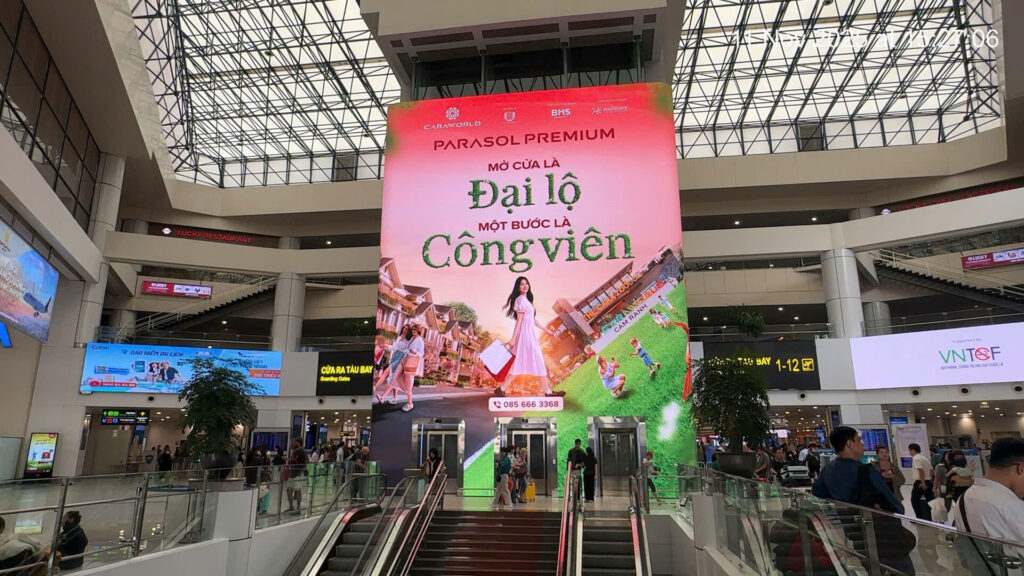
Meanwhile, the multi-sided structure of the T3 Twin Media Towers opens up possibilities for developing creative content across multiple surfaces. Content can be synchronized, sequenced, or assigned different roles across screens to create a seamless visual experience within the check-in area.
Therefore, rather than simply resizing an existing TVC, brands should consider the characteristics of the media format as an integral part of the creative concept.
Creative: One TVC Cannot Fit Every Screen
Khi định dạng media thay đổi, creative cũng cần thay đổi theo.
Với Tháp Media Nội Bài, tỷ lệ hiển thị theo chiều cao tạo điều kiện cho những nội dung khai thác chuyển động dọc, vật thể lớn hoặc hiệu ứng thị giác gắn với kiến trúc.
Trong khi đó, cấu trúc đa mặt của Tháp đôi T3 mở ra khả năng phát triển creative xuyên nhiều bề mặt. Nội dung có thể được đồng bộ, nối tiếp hoặc phân vai giữa các màn hình để tạo cảm giác liền mạch trong không gian check-in.
Do đó, thay vì chỉ resize một TVC có sẵn, thương hiệu cần xem đặc tính media như một phần của ý tưởng sáng tạo.
Timing: Xuất hiện đúng lúc quan trọng không kém đúng chỗ
Airport DOOH can be used throughout the year, but its impact may vary depending on travel seasons, holiday peaks, product launch periods, or major brand events.
A product launch campaign may require intensive exposure during the first few weeks. A festive campaign may increase visibility before and during peak travel periods. For long-term branding, brands need to maintain sufficient exposure frequency to build brand recall.
Therefore, an Airport DOOH strategy should follow a clear sequence: define campaign objectives, identify the right audience, select target markets and airports, and only then determine advertising formats, creative content, and campaign timing.
Connecting Two Airports into One Strategy
The value of Airport DOOH lies not only in individual screens but also in the ability to connect multiple touchpoints into a consistent brand journey.
With the Media Tower at Noi Bai and the Twin Media Towers at Terminal T3 of Tan Son Nhat, brands can leverage two distinct yet complementary approaches to visibility: an architecturally integrated landmark in the North and a multi-sided, content-synchronized display system in the South.
In this approach, airport advertising is no longer planned around individual locations. Instead, it becomes a cross-market strategy in which objectives, audience, physical environments, creative content, and timing are connected to create a unified brand experience.