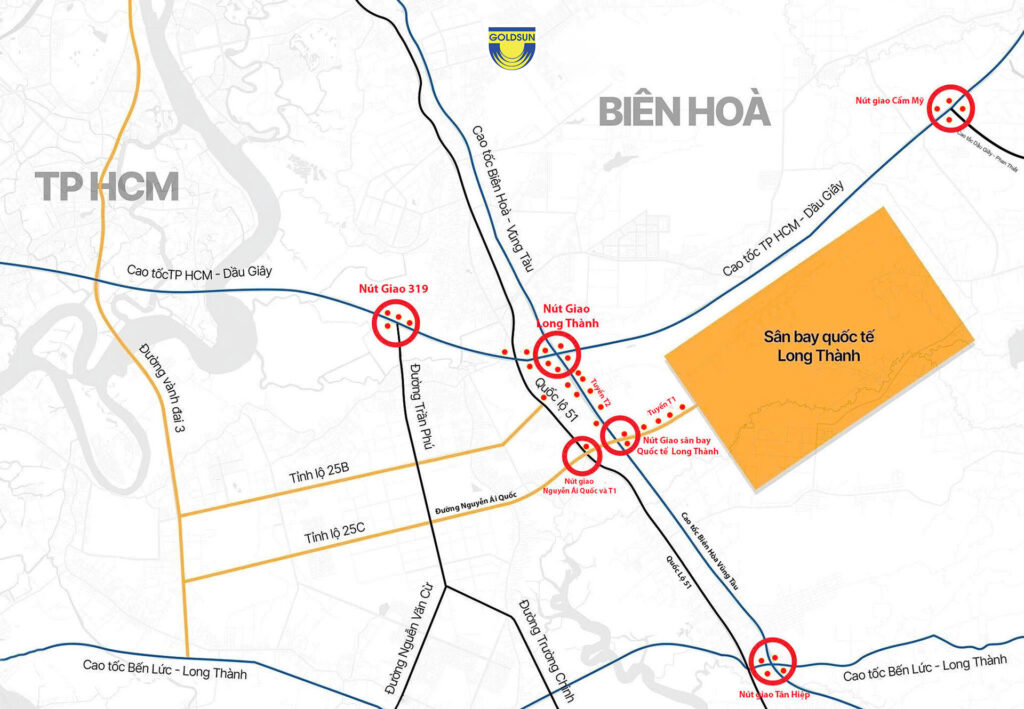
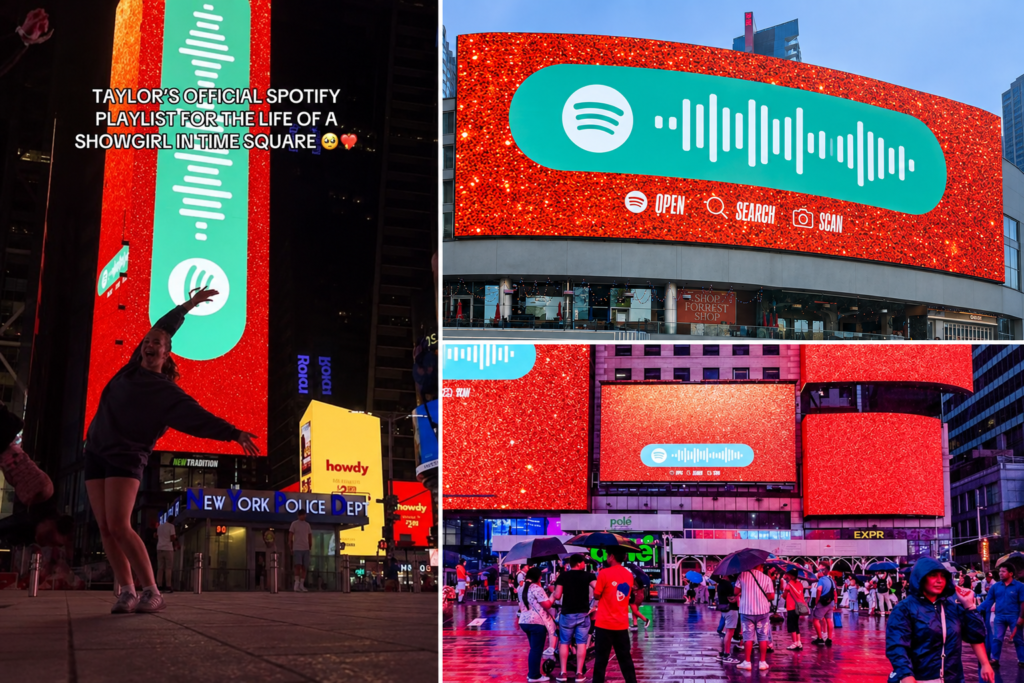
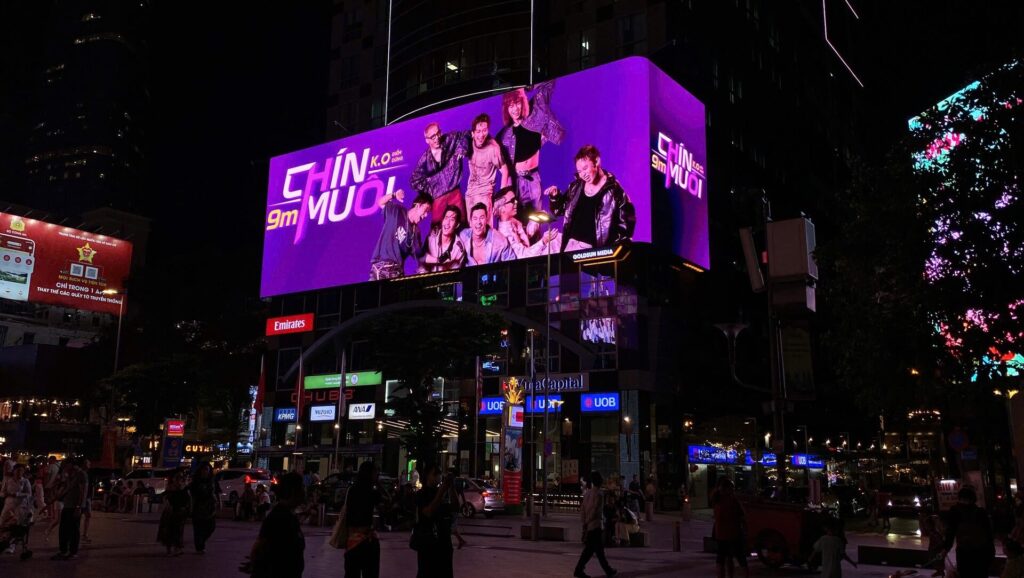
In the context of growing e-commerce, physical stores continue to play an important role in the shopping journey. DOOH is evolving from an awareness-building channel into a tool for driving consumer action and supporting in-store sales. With the ability to deliver content based on location, time, weather, and consumer behavior, DOOH can reach customers near stores and encourage purchase actions. Combined with Programmatic DOOH, 3D experiences, and measurement solutions such as footfall, sales lift, and QR activation, brands can build a closed-loop communication journey, from capturing attention to driving conversion.
1. The Rise of Digital OOH in the New Era
Against the backdrop of a rapidly changing retail market, establishing a brand presence at the “critical touchpoint” is one of the key strategic objectives. Despite the growth of e-commerce, real-world data confirms that physical stores remain at the heart of the retail ecosystem. Consumers spend more than USD 555 billion on retail globally each month, yet only 18.9% of that spending takes place online. With 82% of transactions still taking place in physical stores and 62% of purchase decisions being impulse buys, the point of sale remains a fiercely competitive battleground for market share.
Digital Out-of-Home advertising (Digital OOH or DOOH) is no longer a standalone media channel, but serves as an ideal “bridge” for the O2O (Online-to-Offline) journey. With reach that cannot be blocked or skipped, DOOH is attracting significant investment, with the market projected to reach USD 4.56 billion by 2029. It is an effective tool for activating strong purchase intent at the “final experiential stage,” turning advertising impressions on the street into actual customer traffic at the point of sale.
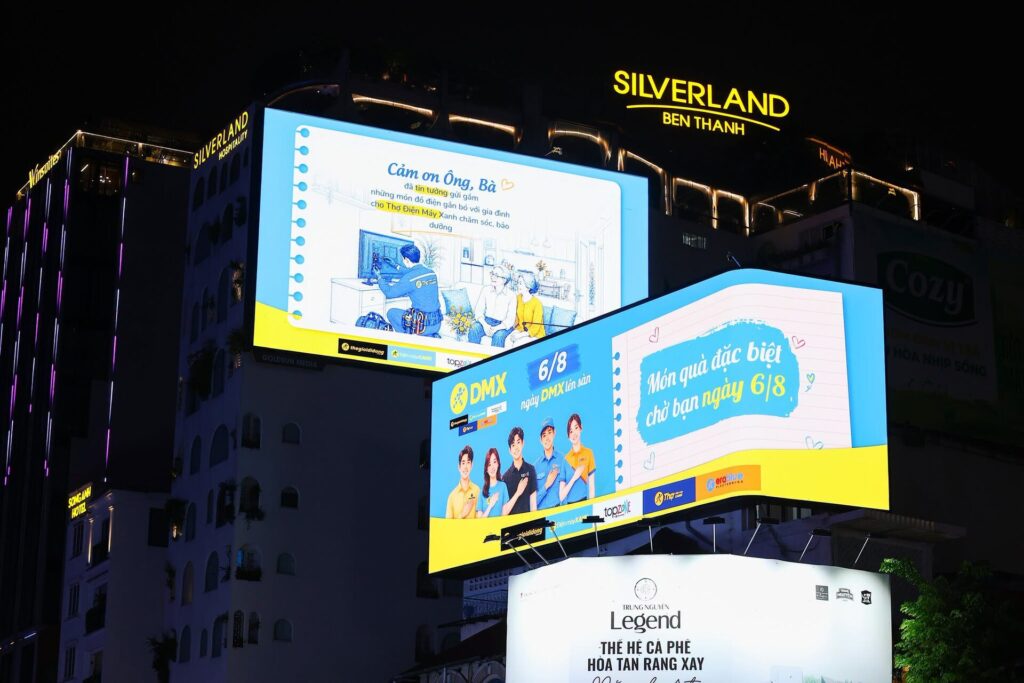
“Triệu lời cảm ơn” campaign by Thế Giới Di Động and Điện Máy XANH across the DOOH network (Source: Điện Máy XANH)
2. Real-Time Data Analysis: The Key to Dynamic Content
The breakthrough power of DOOH lies in its ability to adapt to context. Research shows that displaying content relevant to the surrounding environment can increase viewers’ brain response by 32%. In particular, as 41% of consumers are willing to switch brands or stores to save money, the ability to update prices and promotions in real time is key to winning the attention of price-sensitive consumers.
Data Activation and Performance KPI Matrix
| Data Type | Trigger Mechanism | Strategic Impact & KPI |
| Weather | Environmental sensors (rain/temperature). | Category Optimization: Promote hot beverages/insulated products when temperatures drop. |
| Frequency/Peak Times | Hard-coded rules (morning/noon/evening). | Stimulate Immediate Demand: Advertise grab-and-go breakfast during commuting hours. |
| First-Party Data | CRM/Loyalty system integration. | Increase Conversion Rate: Display exclusive offers for members in areas near points of sale. |
| Geographic Location | Geofencing around stores. | Increase Footfall: Provide distance and directions to the nearest store. |
This strategy is powered by a Programmatic DOOH system, which automates the ad-buying process based on data. Integrating “hard-coded” rules helps ensure that every advertising investment is optimized by delivering the most relevant message at precisely the moment when consumers are about to make a purchase decision.
3. Proximity Targeting Strategy
The concept of “location” has been modernized by DOOH into “strategic touchpoints.” Placing ads along the customer’s actual journey helps minimize “friction” throughout the purchase journey.
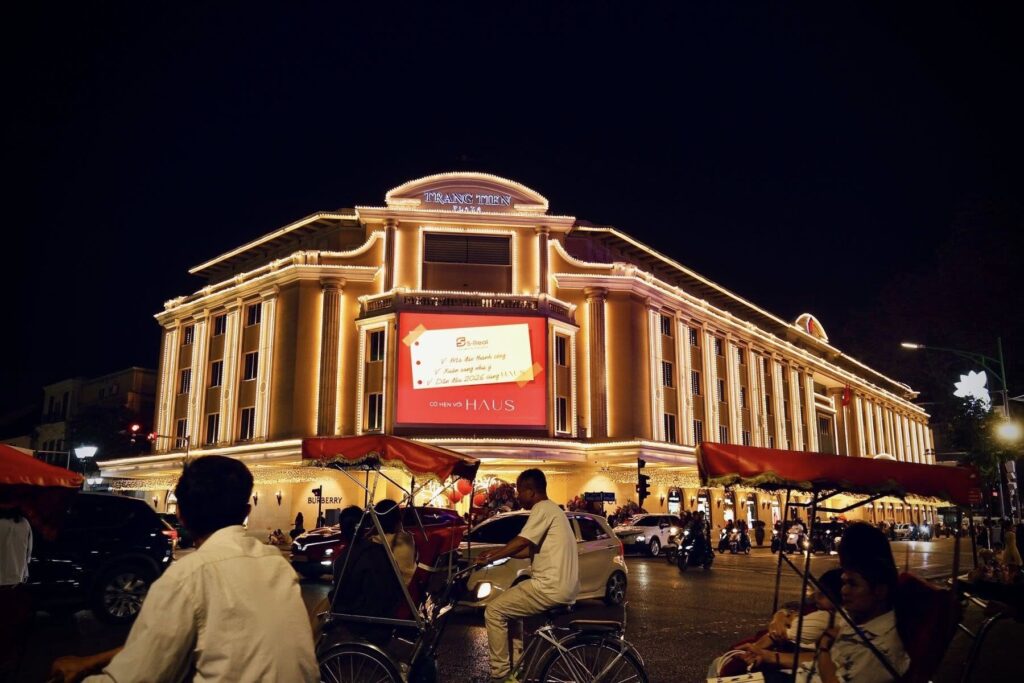
Location is always a top priority when brands choose OOH (Source: HAUS)
Audience Segmentation by Strategic Environment:
- Shopping Malls: This is the environment with the highest purchase intent. In fact, 75% of shoppers still pay attention to OOH advertising even after entering the store.
- Transit Hubs: Leverage the 5–15-minute dwell time at train stations and bus terminals to deliver more detailed brand stories.
- City Centers and Major Intersections: Build brand awareness in affluent residential areas or along major roads leading to shopping malls.
Driving Action (Call-to-Action): To maximize effectiveness, dynamic content should include:
- Visual Wayfinding: Display the exact number of steps or meters to the nearest store.
- Location-Based Personalization: Promotions tailored to specific points of sale.
- Creating a Sense of Scarcity: Countdown timers for flash sales or new product launches.
4. From 3D Anamorphic to Interactive Experiences
To win the battle for attention, brands must shift from static advertising to immersive visual experiences. The 3D DOOH (Anamorphic) format has demonstrated the ability to increase conversion rates by up to 40% by creating a sense of wonder within the display environment.
Key Case Studies:
- Prada (Paradoxe Parfum): Capitalizing on the booming Gen Z fragrance culture, which is growing 8% YoY in the luxury segment. The campaign uses sophisticated 3D visuals in central locations to reinforce its leading position in a market projected to reach USD 60.73 billion in 2025.
- Evian x US Open: Featuring tennis player Frances Tiafoe at Penn Plaza (New York). A tennis ball transforms into a 3D snow globe at the transit hub, which sees 600,000 passengers each day, turning a waiting area into a brand stage.
- Louis Vuitton x Yayoi Kusama: Taking over Shinjuku Station (Tokyo) – one of the world’s busiest railway stations, with 3.6 million passengers per day – with an iconic 3D polka-dot trunk, transforming an advertising screen into a large-scale public art installation.
- Dyson: Showcasing the assembly process of the 360 Vis Nav™ robot vacuum in Melbourne, where 28,000 people pass through each day, turning DOOH into a compelling real-world product demonstration.
5. Measuring Effectiveness and Closed-Loop Attribution
The era of “advertise and hope” is over. With a Closed-loop approach, DOOH enables brands to connect physical impressions with digital actions:
- Mobile Location Data: Track the customer journey from exposure to a DOOH screen to entering the store.
- Footfall Analysis: Accurately measure the increase in store visits (lift) driven by advertising.
- Sales Lift Studies: Compare sales data by area to determine the actual ROI.
- Mobile Activation: Leverage QR codes to direct customers to a microsite or save vouchers to their mobile wallets. In fact, 76% of users take action on their mobile devices after interacting with DOOH.
6. Occasion-Based Marketing: Optimizing Peak Sales
Festive occasions are a key growth driver for the retail industry. In the UK alone, the nine biggest shopping occasions of the year generate more than £33 billion in sales, providing an important benchmark for global campaigns.
Occasion-Based Shopping Strategy Roadmap
| Key Occasion | Shopper Base | Key DOOH Tactic |
| Christmas | 46 million people | Emotional messaging and real-time gift recommendations. |
| Black Friday | 28 million people | Urgency: Update inventory availability and discounted prices by the minute. |
| Back to School | 19 million people | Focus on convenience and product bundles for parents. |
| Mother’s Day | 29 million people | Direct shoppers to the nearest gift retailer (Last-minute gifts). |
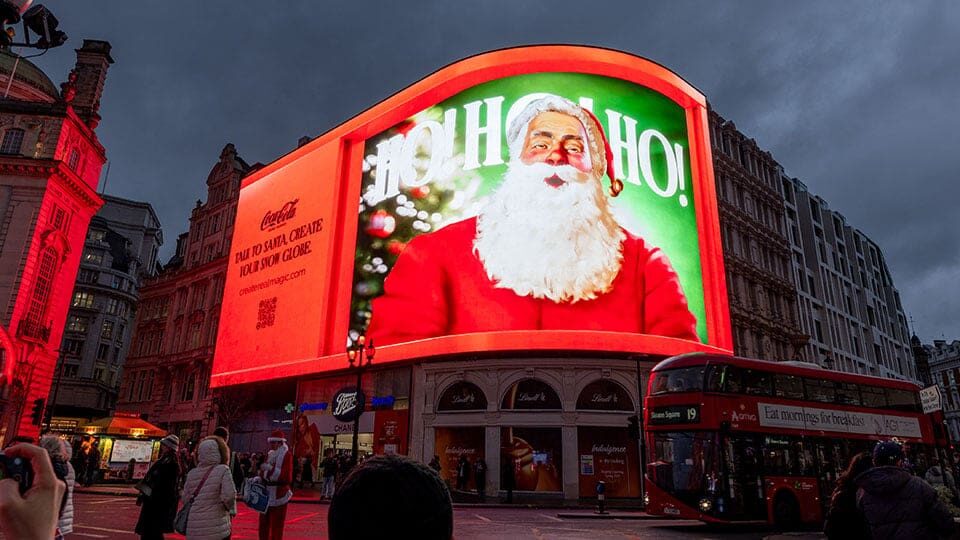
Coca-Cola partnered with Ocean Outdoor to launch the “Talk to Santa” campaign as part of its activation at Piccadilly Lights in London (Source: Signlink)
During these periods, using dynamic content to announce “flash-hour” offers or display remaining inventory is a key tactic for triggering immediate purchase action among consumers on the move.
7. Conclusion
DOOH is more than just a digital screen; it is a high-conversion strategic touchpoint in the modern purchase journey. To fully unlock its potential in the future, marketers should keep the following in mind:
- Prioritize Programmatic Partners: Choose platforms capable of processing real-time data and integrating first-party data.
- Context-Driven Creativity: Content should be tailored to each environment to ensure consistency.
- Implement a Closed-Loop Customer Experience Journey: Always integrate QR codes or unique promotional codes to accurately measure performance from exposure to purchase.
In the future of modern retail, the brands that succeed will be those that know how to turn public spaces into experiential stages and transform consumer attention into tangible revenue through the power of DOOH.
Sources:
https://broadsign.com/blog/retailers-turn-to-digital-ooh-to-drive-foot-traffic-and-boost-sales-as-consumers-return-to-in-store-shopping/
https://www.fugo.ai/blog/retail-media/
https://www.bauermediaoutdoor.co.uk/advertising/new-to-out-of-home/what-is-retail-advertising/what-is-retail-advertising/the-future-of-retail-advertising-emerging-technologies-and-trends
https://www.bauermediaoutdoor.co.uk/advertising/new-to-out-of-home/what-is-retail-advertising/what-is-retail-advertising/the-power-of-retail-occasion-based-marketing
https://fooh.com/blog/dooh-for-retail
https://www.encompassagency.com/insights/using-dooh-in-retail-marketing.html#gref