1. The Era of Digital Out-of-Home Advertising (DOOH)
As consumers become increasingly “immune” to online advertising, which can easily be ignored or blocked by technology, Digital Out-of-Home (DOOH) has emerged as an increasingly compelling media channel. This is not simply about replacing static billboards with large digital screens; it represents a strategic evolution in reaching consumers at key “touchpoints” in the real world.
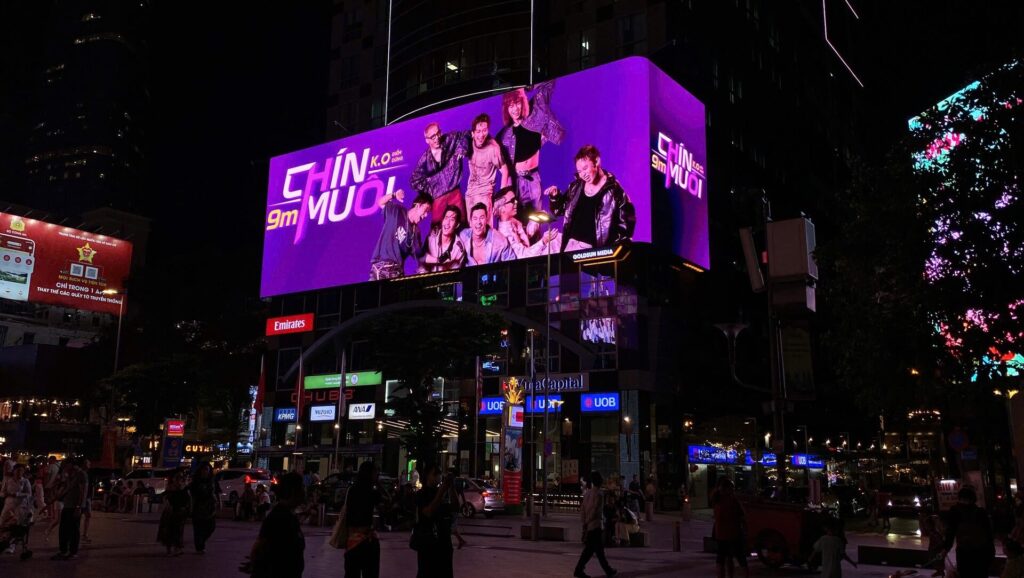
Definition: DOOH (Digital Out-of-Home) is a form of digital advertising displayed in public spaces, such as streets, airports, and shopping malls. Unlike traditional billboards, DOOH enables dynamic, interactive, and contextually personalized content in real time, transforming static messages into engaging brand experiences.
Three core characteristics make DOOH a powerful advantage throughout the path-to-purchase:
- Flexibility: Enables brands to instantly adapt their messaging based on real-time data, such as switching from breakfast to lunch menus.
- Unavoidable Impact: Reaches consumers while they are on the move and ready to spend, overcoming the skip-and-block limitations of digital advertising.
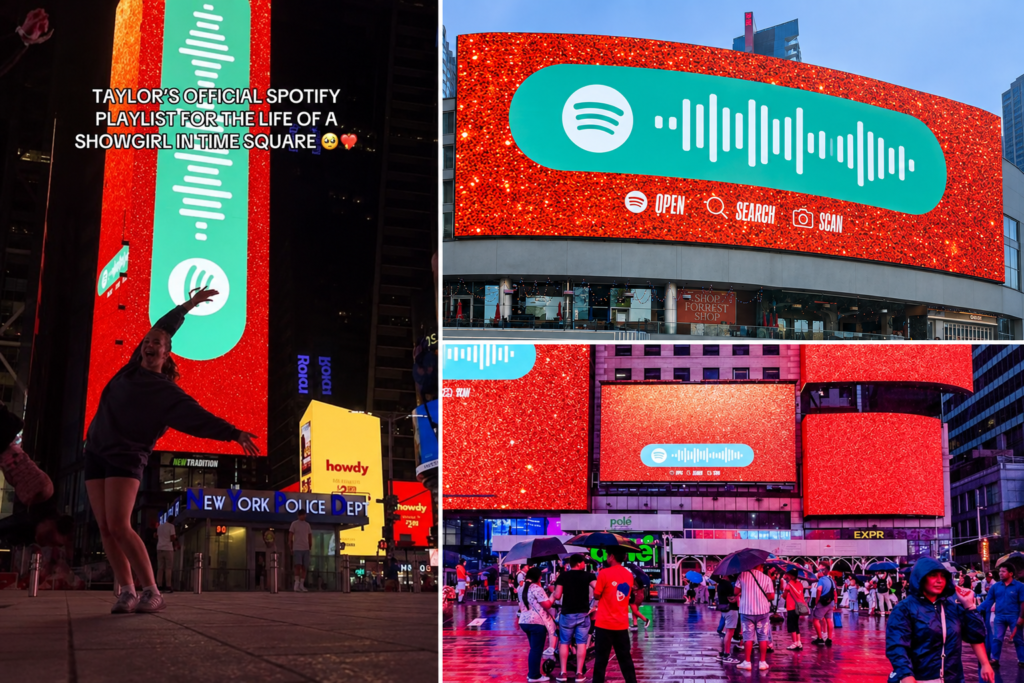
- Interactive Power: The ability to integrate QR codes, AR, and Mobile Wallets to turn a visual impression into an immediate purchase action.
This shift goes beyond flat screens. The next frontier of DOOH is 3D technology, where creative content serves as the fuel and technology as the engine for capturing consumers’ attention.
2. Iconic 3D Campaigns: Where Creativity Meets Technology
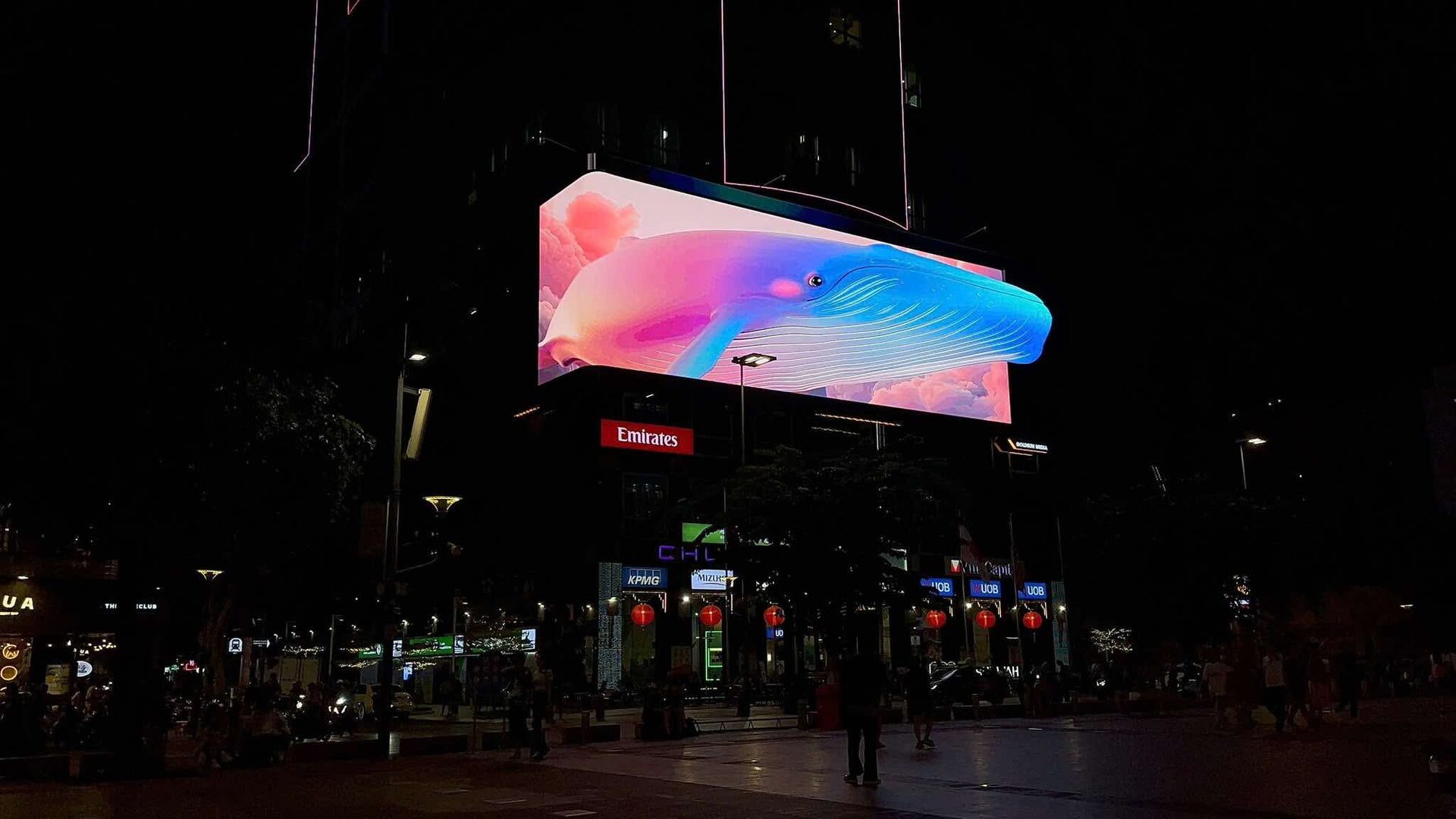
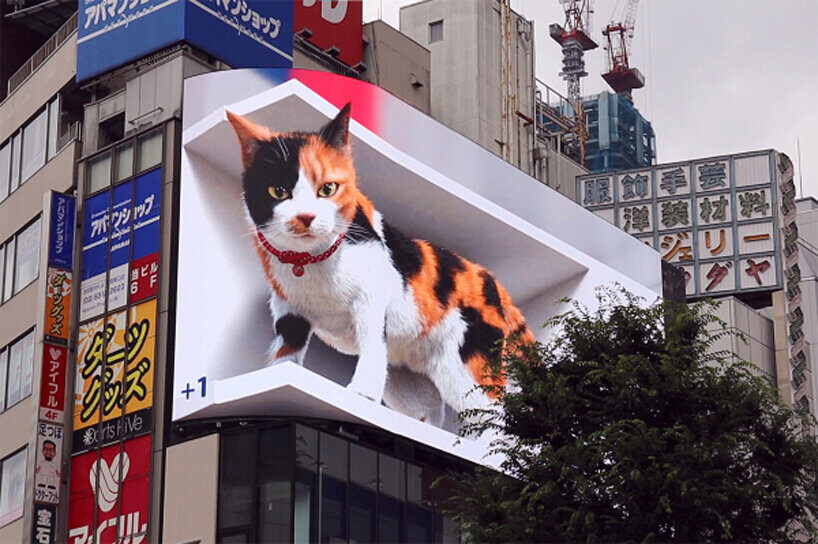
To understand the “magic” of 3D DOOH, we first need to understand the concept of Anamorphic (geometric distortion). This is a technique that intentionally distorts an image so that, when viewed from a specific angle on a curved screen, it appears with realistic depth and dimensionality, creating the illusion of emerging from the screen.
| Brand | Product / Event | Core Creative Element (3D) | Strategic Impact / Outcome |
| Dyson | 360 Vis Nav™ Vacuum Cleaner | An assembly effect featuring the vacuum cleaner taking shape, while objects such as confetti and cat food appear to burst out of the screen. | Live Product Demo: Enhances awareness of breakthrough features through realistic simulation in premium retail areas. |
| Louis Vuitton | Yayoi Kusama Collection | A polka-dot trunk opens, with signature patterns spilling out into the surrounding space. | Mass-market Moment: Transforms the artistic collaboration into a mass cultural phenomenon, reinforcing the luxury brand’s positioning. |
| Cartier | Holiday Campaign | Panthère watches and jewelry appear to float through a winter scene. | Global Brand Awareness: Creates a consistent, premium visual experience on a global scale. |
| Ray-Ban | Ray-Ban Reverse Collection | A 360-degree rotating image of the eyewear frame highlights the unique reverse lens design. | Product Education: Enables consumers to immediately understand the technical innovation within just a few seconds of viewing. |
“Emotional Touchpoints” and Strategic Thinking:
- Dyson: A master of “simplifying technology.” The use of a cat and confetti is not merely decorative; it allows viewers to instantly understand the power of the vacuum’s motor without having to read a single line of specifications.
- Louis Vuitton: Uses Shinjuku – one of the busiest places in the world – to transform a billboard into an outdoor “gallery,” blurring the line between commerce and art.
- Cartier: Taps into the year-end shopping mindset by turning its products into part of the festive dream, driving demand for gifting and self-purchase.
- Ray-Ban: Rolls out the campaign simultaneously across major hubs (LA, New York, and Tokyo) to build a strong global presence, while using 3D effects to explain what sets the “Reverse” collection apart.
Going beyond simply capturing attention, the next step in the strategic process is to recognize that exceptional content needs a stage worthy of it to maximize its impact.
3. The Importance of Location: Why Is “Location” the Key to Success?
In a DOOH strategy, location is not merely a geographic coordinate, but a factor that determines Opportunity Density. “Prime” locations offer three layers of benefits:
- Brand Identity: Appearing in Times Square or Piccadilly establishes your brand as a “giant” in the industry.
- Massive Audience Reach: Ensures the highest possible number of impressions within a given period.
- Viral Loop: 3D advertisements at these locations are often filmed and shared by tourists on TikTok and Instagram, turning a local billboard into a global campaign.
Traffic Statistics at Leading DOOH “Stages”:
| Location | Traffic / Impressions | Strategic Role |
| Shinjuku Station (Tokyo) | 3.6 million passengers/day | The world’s busiest railway station; the location where Louis Vuitton created a major media impact. |
| Times Square (New York) | 1.5 million impressions/day | The “Crossroads of the World”; well suited to flagship launch campaigns such as American Eagle. |
| Piccadilly Circus (London) | 2 million pedestrians/week | A key intersection of shopping and tourism; ideal for Cartier’s luxury campaigns. |
| Bourke Street Mall (Melbourne) | 28,000 pedestrians/day | A core shopping district; the location where Dyson conducted a live product demo. |
Prime locations attract crowds, but to turn attention into action, we need to activate the “engine” of context-driven content optimization.
4. Optimization Strategy: How to Create High-Impact Content
Smart DOOH advertising does not simply “play videos”; it also “reacts” to its environment. According to research, ads with contextually relevant content can increase brain response by 32%, resulting in deeper recall.
- Proximity Targeting: Deploy ads when consumers are in busy shopping areas or near stores. This strategy minimizes “ad waste” and serves as a last-mile driver, encouraging consumers to walk into the store.
- Weather Triggers: The system automatically displays ads for hot beverages when temperatures drop or swimwear when the weather is sunny. This feature helps optimize budgets by displaying products only when consumers’ actual demand peaks in response to environmental conditions.
- Timing Optimization: Deliver content based on consumers’ daily routines (breakfast at 7 a.m., cocktails after 6 p.m.). This ensures that the message remains “fresh” and relevant to consumers’ mindset at each moment.
- Dynamic Content: Automatically update the distance to the nearest store or display a countdown to a promotional event. These dynamic messages create a sense of urgency while providing clear guidance for the purchase journey through a call to action.
Practical Lessons in Occasion-Based Marketing
In the UK, the nine biggest shopping occasions, including Christmas, Black Friday, and Valentine’s Day, account for as much as £33 billion in retail sales. A classic example is Gordon’s Gin, which placed ads directly outside supermarkets around Valentine’s Day to influence customers who were still undecided at the final stage of their shopping journey, delivering an exceptional ROI.
5. Connecting the Offline-to-Online Journey (Omnichannel Marketing)
Modern DOOH strategies bridge the gap between the physical and digital worlds. According to research from OAAA and Morning Consult, as many as 76% of consumers take action on their mobile devices (searching, visiting websites, or making purchases) immediately after seeing a DOOH ad.
The Process of Converting Viewers into Online Customers:
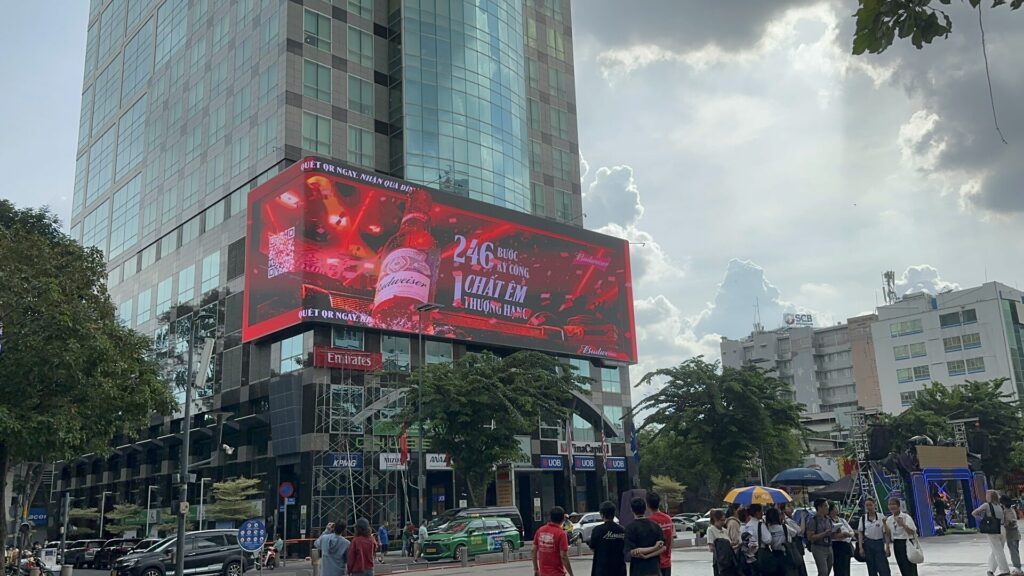
- Dynamic QR Code Integration: Scan the code to receive a discount voucher or access the product details page.
- AR (Augmented Reality) Experience: Use a smartphone to view virtual directions to the store or “try on” a 3D product on the spot.
- Mobile Wallet Integration: Allows customers to save offers directly to their mobile wallets. The system automatically sends reminders when customers pass by the store or when a voucher is about to expire.
- First-Party Data Loop: Use data from these interactions to personalize subsequent remarketing campaigns on social media.
6. A Practical Guide for Content Creators
To command attention in both physical spaces and consumers’ minds in the era of 3D DOOH, strategists and creatives need to keep the following three golden principles in mind:
- Visual Storytelling – Simplify the Engineering: Don’t try to explain technology through text. Use 3D effects to visually demonstrate product features in the most intuitive way possible (as Dyson does with the cat to communicate suction power).
- Context Is Queen: Beautiful content in the wrong place or at the wrong time is a waste. Leverage Programmatic DOOH to ensure your message always appears in the right environmental context and aligns with consumers’ needs.
- Seamless, Frictionless Action: Always provide viewers with a digital “next step.” 3D ads capture their attention for 5–10 seconds, but QR codes and Mobile Wallets are what keep them engaged throughout the longer purchase journey.
The next time you step out onto the street, observe advertising screens not as a passerby, but as a strategist. Ask yourself: “Is this billboard making use of weather data? Does it make me want to take out my phone?” That is the first step toward mastering the art of DOOH.
Sources: