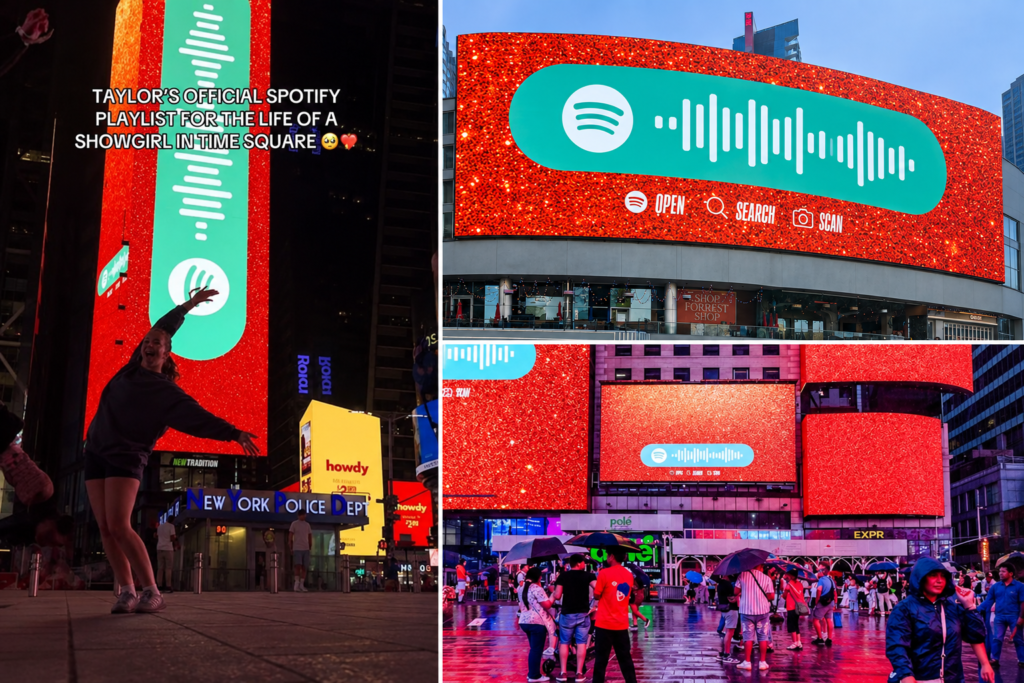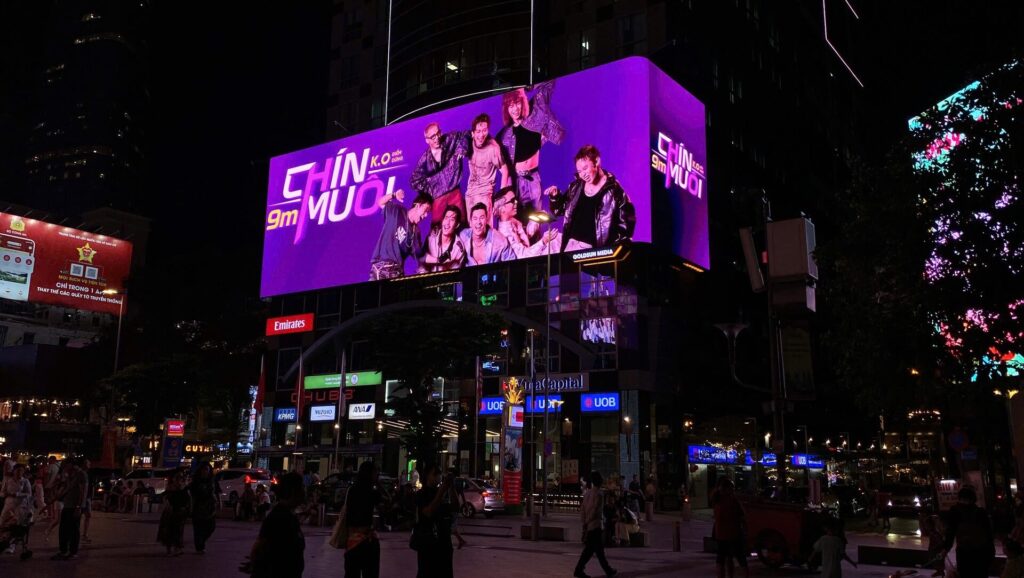


No longer limited to static billboards that serve primarily for brand awareness, OOH/DOOH has evolved into a conversion-driving activation touchpoint within the O2O (Offline-to-Online) model. Let’s examine this strategic shift through three real-world case studies from Fuze Tea, Prudential, and Running Man Vietnam to understand how brands are redefining ROI for outdoor advertising in the digital era.
1. The evolution of OOH in the era of digital interaction
In the era of digital transformation, out-of-home advertising (OOH) has moved beyond the definition of static billboards that simply “stand still” to become powerful digital touchpoints (DOOH). This shift is not simply a change in display technology, but a strategic turning point in shaping the customer journey.
Integrating QR codes, physical sensors, and interactive elements has transformed OOH into an effective bridge for the O2O (Offline-to-Online) model. Real-world campaign results show that OOH is no longer limited to building brand awareness at the top of the funnel. Today, it has become a true conversion point. By connecting physical spaces with digital interaction logic, brands are redefining OOH ROI through real-world data and user behavior, rather than relying solely on estimated traffic metrics.
2. Fuze Tea Case Study: “Visual Flow” and Multisensory Experiences
Fuze Tea’s 2025 new-look launch campaign is a typical example of how creative design can break through ad blindness in urban spaces. At Wesselényi Street in Budapest and later at Nguyen Hue Walking Street in Vietnam, Fuze Tea created an engaging “visual flow” that encouraged passersby to stop rather than simply walk past.
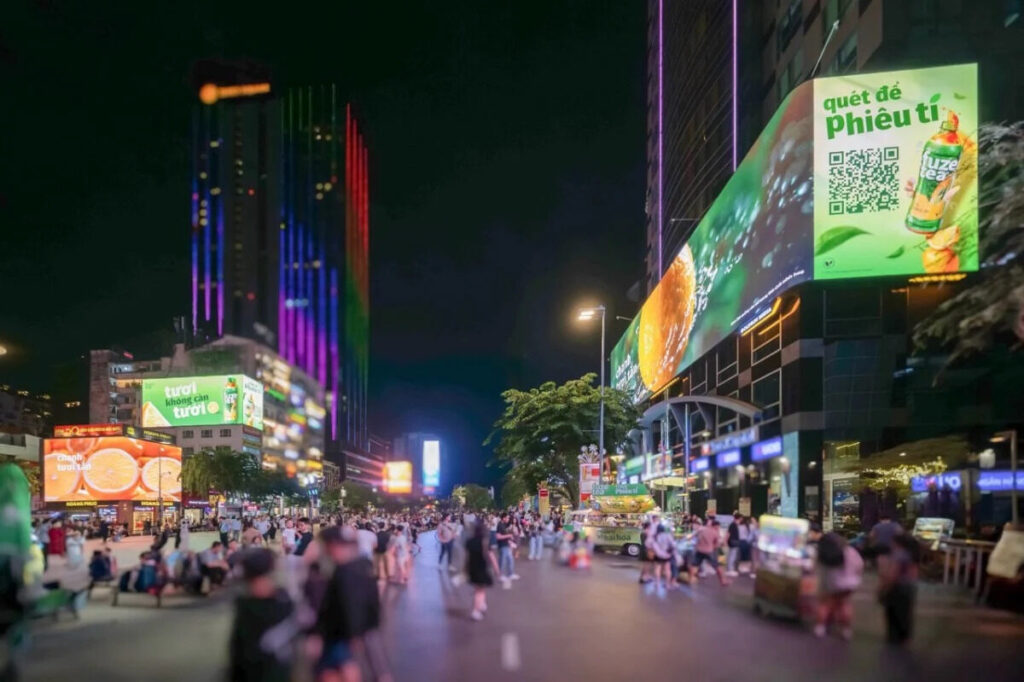
Analyzing the multi-layered interaction mechanism
The combination of physical and digital interaction optimized conversion effectiveness:
| Interaction Type | Execution Element | Impact on Users | Conversion Objective |
| Physical interaction | Push buttons for voting on favorite flavors installed on bus shelters/billboards. | Stimulates a multisensory experience and creates direct engagement with the product. | Brand Engagement: Strengthen engagement and awareness of new flavors. |
| Digital interaction | QR code leading to an online prize draw. | Turns immediate curiosity into action on digital platforms. | Data Capture: Collect customer information and encourage product trial. |
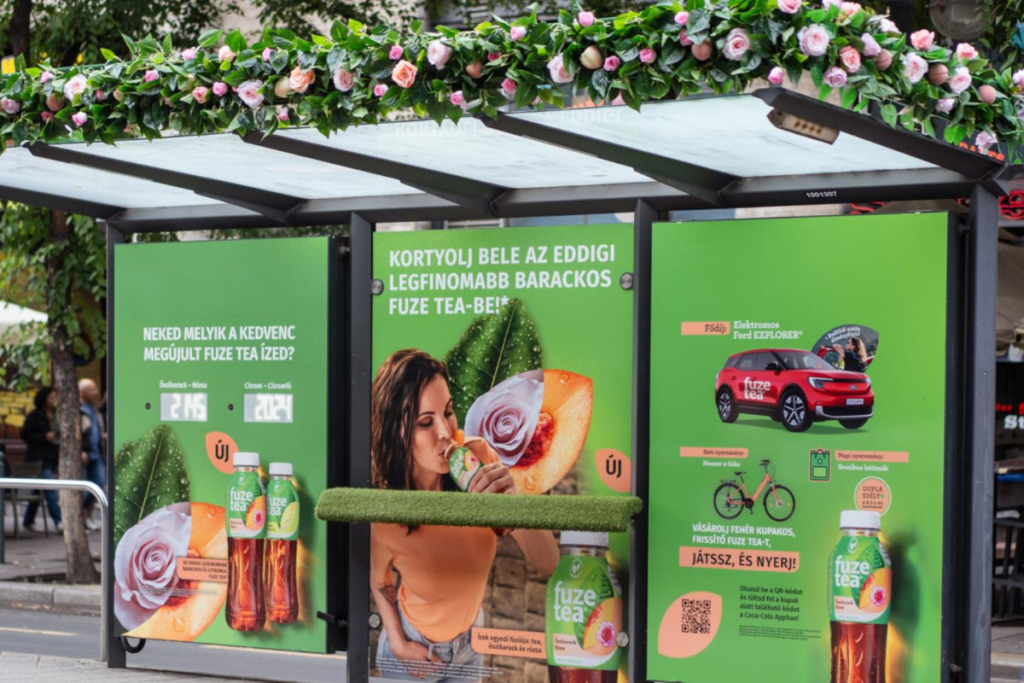
The design of the colorful floral shelter and flowing elements was not merely aesthetic. It was an “Ambient Marketing” tactic aimed at transforming an ordinary bus stop into a personalized experience space. By pressing the “vote” button, consumers no longer simply received a one-way message but actually participated in the brand’s story, thereby reinforcing awareness of the Fuze Tea 2025 product line.
3. Prudential Case Study: “Check-in with Điều Quý Giá” and the Power of Social Amplification
While Fuze Tea focused on sensory experience, Prudential upgraded OOH into a tool for amplifying community inspiration. The campaign, which took place in August 2026, transformed LED screens at major intersections into an “outdoor studio,” leveraging the power of user-generated content (UGC).
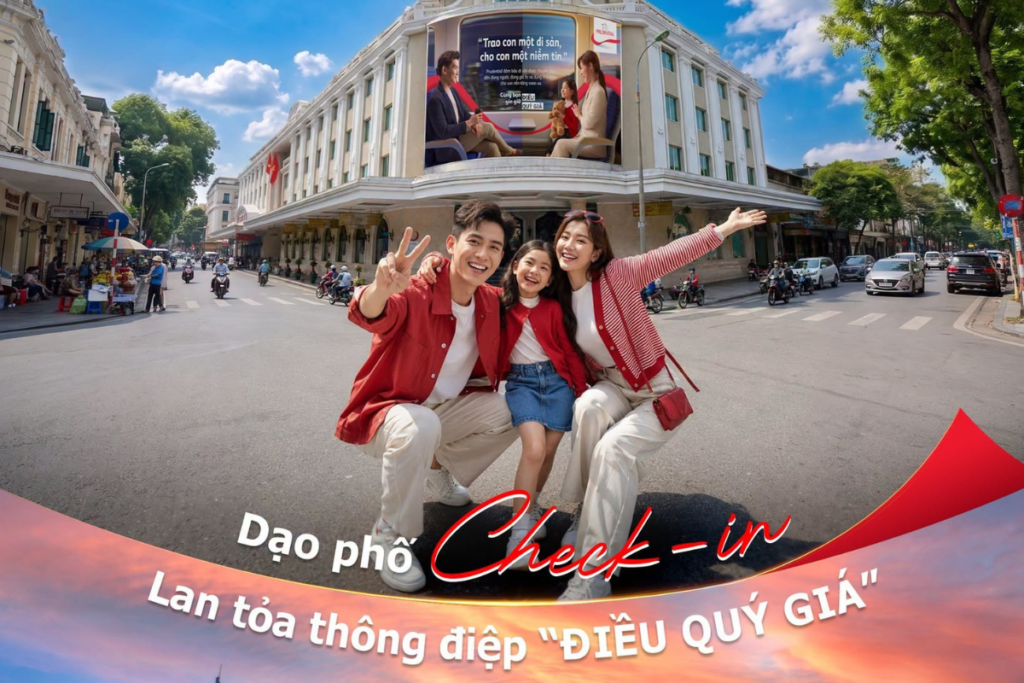
The mechanism for turning viewers into “Brand Amplifiers”
The campaign established a strict three-step process to convert offline traffic into digital assets:
- Capture (Take a photo): Participants actively searched for and checked in with the “Điều Quý Giá” message on the LED billboard.
- Socialize (Share): Publicly posting with the campaign hashtag – this step turned users’ personal accounts into an auxiliary media channel for the brand.
- Convert (Confirm): Interacting on the fanpage to receive a prize code, helping Prudential establish the final digital connection with customers.
The key point here is measurability. In traditional OOH, we measure through OTS (Opportunity to See), but with Prudential, the actual metric is the conversion rate to Social Share.
OOH now plays the role of a “Content Platform” – a content creation platform, helping a fixed advertising location achieve a huge indirect Reach through Earned Media.
4. Running Man Vietnam 2026 Case Study: Gamification and the OOH Code Hunt Campaign
From individual check-in activities, the OOH interaction model was taken to its peak through the Gamification strategy in Running Man Vietnam 2026’s “Chạy Ngay Đi” campaign. This represents a shift from a “Passive” state of advertising consumption to a completely “Active” one.
Coordinate Strategy and Time-bound Trigger
The campaign selected four iconic and strategic locations in Ho Chi Minh City to hide 14 codes:
- Nguyen Hue Walking Street: The entertainment hub, where the young audience is concentrated.
- Ben Thanh Market: A cultural symbol with extremely high intersecting traffic.
- Cach Mang Thang 8 – Nguyen Thi Minh Khai Intersection: A major traffic bottleneck, optimizing red-light waiting time to search for codes.
- Ba Son Bridge: A symbol of the new urban area, attracting modern and premium customers.
Limiting direct offline activities and releasing Hints for only 03 days created a powerful “time-bound activation touchpoint,” driving players to act immediately so they would not miss the opportunity.h hoạt giới hạn thời gian” mạnh mẽ, thúc đẩy người chơi phải hành động ngay lập tức để không bỏ lỡ cơ hội.
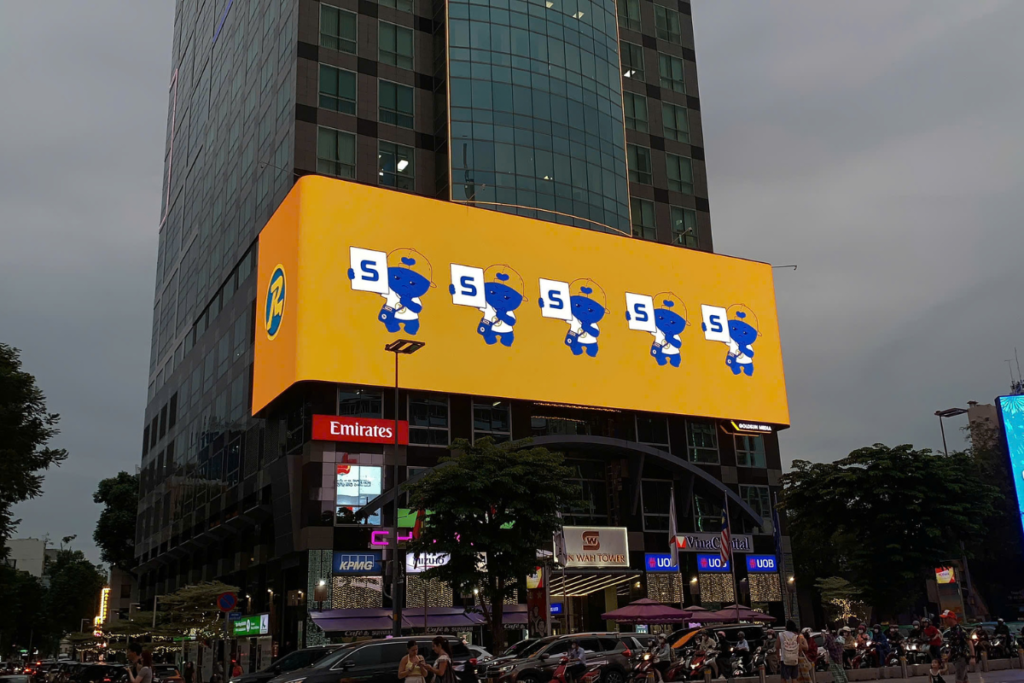
OOH in this campaign played the role of a “Content Hub.” Advertising was no longer intrusive content but became the “challenge” of a game.
This helped maintain prolonged attention (Retention), requiring users to observe LED billboards more carefully than with any traditional form of advertising, thereby creating a closed-loop interactive ecosystem between OOH – Activation – Social Media.
5. Evaluating media effectiveness and the role of OOH in the O2O model
The results from the three campaigns above affirm a new era of OOH: one where physical boundaries are erased by digital interaction logic. Modern OOH no longer stands independently but has become the backbone of the multi-channel customer journey.
3 core roles of modern OOH:
- Traffic Driver: Serves as a gateway guiding consumers from the physical world to online platforms (Fanpage, Website) through QR codes and “hunt” activities.
- Content Platform: Provides the context and experience for users to create UGC, helping brands gain a natural presence on social media.
- Data Capture: This is the ultimate strategic advantage. In an era when third-party Cookies are being eliminated, collecting first-party data through OOH interactive activities is an important anchor that helps brands understand customer behavior.
Conclusion: OOH is no longer a one-way “broadcast” channel. By integrating QR codes and interactive technology, brands have thoroughly addressed the challenge of optimizing ROI for integrated communications. OOH has become an important bridge, turning every moment on the street into an unlimited opportunity for digital conversion. The future of outdoor advertising is the convergence between powerful physical presence and the endless interactive power of the digital world.a quảng cáo ngoài trời chính là sự hội tụ giữa tính hiện diện vật lý uy quyền và sức mạnh tương tác vô tận của thế giới số.