

In the data-driven marketing era, the most important question for brands is no longer just how many people see an advertisement, but how many people actually pay attention, connect with, and remember the message.
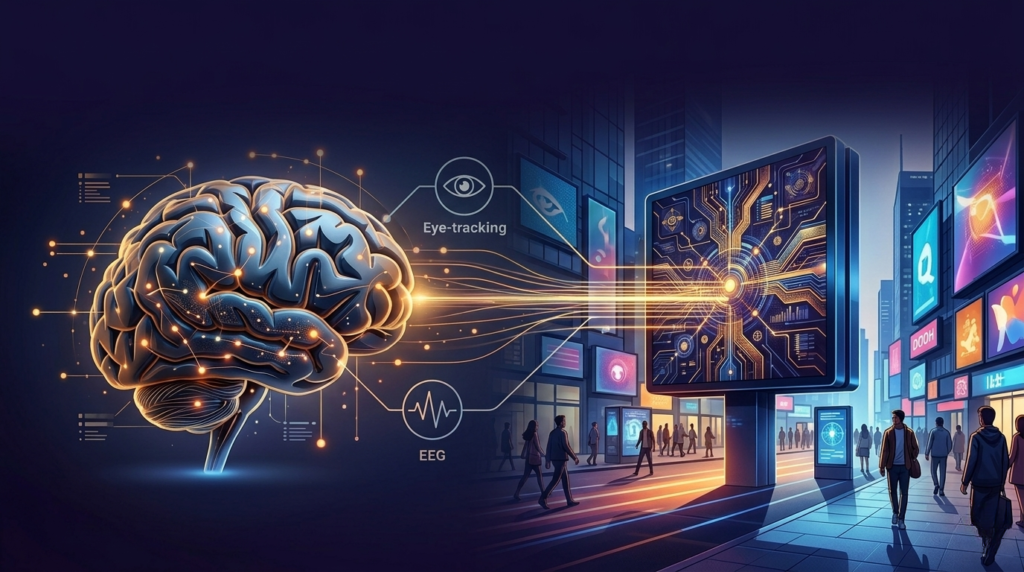
The development of neuroscience measurement technologies is opening a new perspective for the digital out-of-home advertising industry (DOOH – Digital Out-of-Home). According to the study “The Neuroscience of Digital Out-of-Home Advertising Impact” conducted by Allvision in collaboration with Brainsights, the effectiveness of outdoor advertising can be evaluated based on its actual impact on the brain rather than relying solely on traditional reach metrics.
Through Eye-tracking technology (tracking eye movements) and EEG (measuring brainwave signals), using more than 1.7 billion neural data points, the study showed that DOOH not only creates visibility but can also drive attention, emotion, and brand memory.
From OTS to SI: Measuring advertising through real impact
For many years, out-of-home advertising (OOH) has typically been evaluated based on OTS (Opportunity To See) – the likelihood that a person sees an advertisement while passing by a location. However, in increasingly crowded urban environments filled with competing information, appearing within someone’s field of vision does not necessarily mean the message is noticed or remembered.
An advertisement may be seen by thousands of people, but only touchpoints that are powerful enough to capture attention, create emotional connections, and stay in memory can truly generate brand value. Therefore, the OOH industry is shifting from measuring “opportunities for exposure” to evaluating “actual impact”.
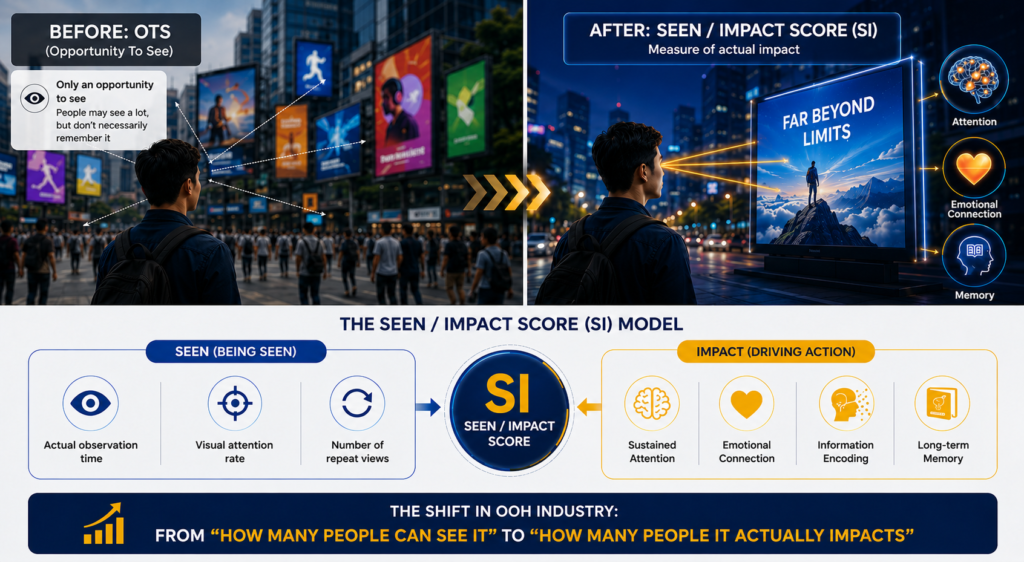
The study introduced the Seen/Impact Score (SI) model – an evaluation method based on two factors: Seen (being viewed) and Impact (creating an effect). Based on more than 1.7 billion neural data points through Eye-tracking and EEG technologies, the study analyzed the journey from visibility to actual attention and lasting impact.
The Seen group measures the ability to capture visual attention through factors such as visual focus rate, viewing duration, and the ability to encourage viewers to look back. The Impact group further evaluates how advertising generates attention, emotional connection, memory, and message absorption.
The emergence of the SI metric represents a new advancement for the OOH industry: advertising effectiveness is no longer determined only by the number of people who can see an ad, but by the ability to create genuine attention, emotion, and memory in customers’ minds.
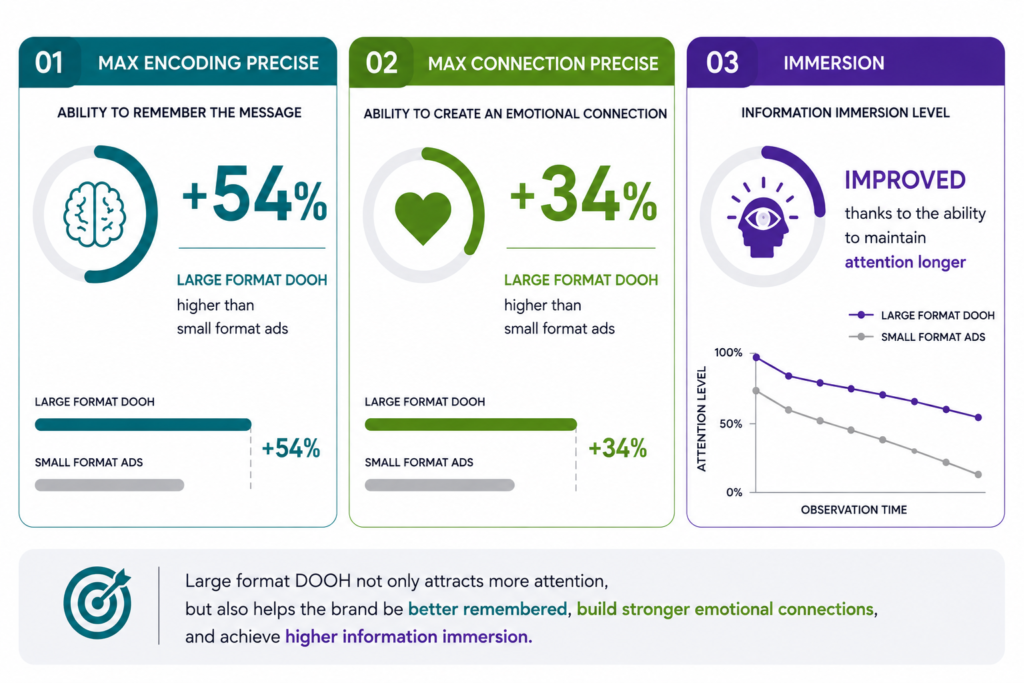
Large-format DOOH creates outstanding advantages in attention and memory
One of the key findings from the study is the clear difference between Digital Large Format DOOH and smaller advertising formats.
The human brain has a limited cognitive bandwidth. When the environment contains too many “noise signals”, the ability to process information becomes fragmented. Therefore, the Lookback index (looking back) becomes a critical measure of advertising engagement. The study shows that large-format displays can encourage viewers to look back 2–4 times more than smaller formats. A person looking back at an advertisement is not simply a physical action; it is a signal that the nervous system has been “primed” and is actively seeking additional information from the message.
The advantage of DOOH does not only come from screen size but also from its ability to create movement, change lighting, transition scenes, and update content flexibly. These elements help digital advertising naturally attract the brain’s attention in an environment filled with information noise.
DOOH becomes a catalyst for multi-channel campaigns
Not only does it operate as an independent communication channel, DOOH also creates a synergy effect when combined with other platforms such as video, audio, and digital.
According to the Allvision and Brainsights study, when DOOH is deployed together with other communication channels, brand recall effectiveness can be significantly improved.
Specifically, when OOH appears after video or audio activities, the following metrics:
- Encoding (memory retention) increases by up to 61%.
- Connection (emotional connection) increases by approximately 50%.
- Attention increases by approximately 30%.
These figures show that DOOH is no longer simply an awareness touchpoint, but is becoming an amplification factor for the entire communication ecosystem.
Goldsun Media and the development direction of next-generation DOOH in Vietnam
The advancement of neuroscience, AI, and data is creating a new transformation for the outdoor advertising industry. The future value of DOOH will no longer be evaluated only by the number of screens or reach, but by its ability to create real impact on consumers.
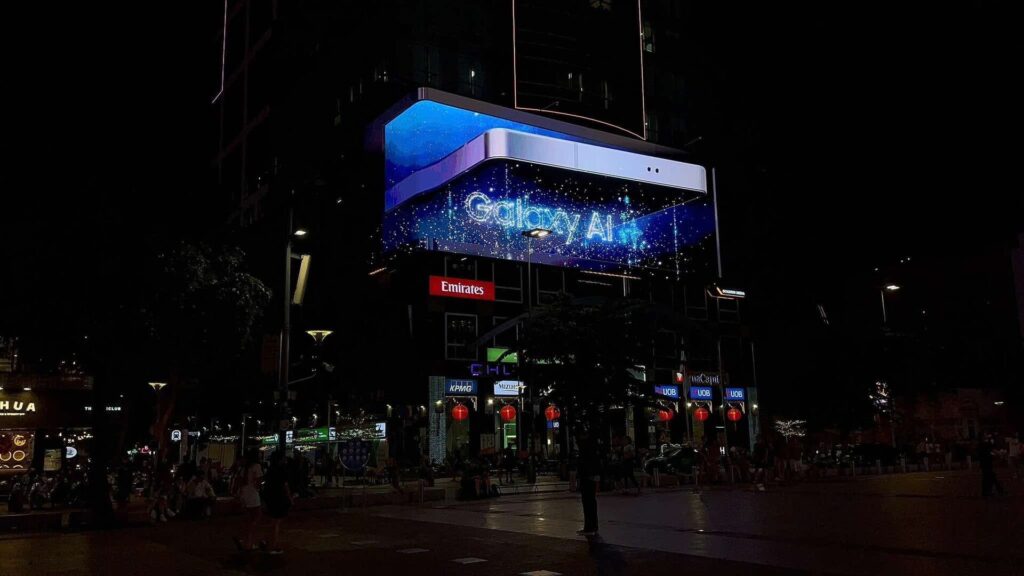
With an outdoor advertising system covering multiple strategic touchpoints including highways, airports, metro systems, and key urban locations, Goldsun Media is gradually upgrading its DOOH capabilities toward a more modern direction: combining technology, data, and operational optimization.
From building a digital screen ecosystem, applying centralized management platforms, to developing smart DOOH solutions, Goldsun Media aims toward a new generation of outdoor advertising – where brands are not only seen but also create a lasting impression in customers’ minds.
In the future, competition in the OOH industry will not only be about who owns more locations, but will belong to businesses capable of transforming data into experiences and turning every touchpoint into a valuable impact.
Source:
- Allvision & Brainsights – “The Neuroscience of Digital Out-of-Home Advertising Impact”
- OOH Today – “DOOH Boosts Attention, Increasing Memory Encoding by Up to 61%”
- Allvision – Neuroscience Research on Out-of-Home Advertising Effectiveness
Hotline: 090 464 66 99
Email: cskh@goldsungroup.com.vn