

How can healthcare brands achieve effective reach as online channels face increasing restrictions? Digital out-of-home (DOOH) advertising offers an answer. Discover 6 breakthrough points that can help brands earn audiences’ trust.
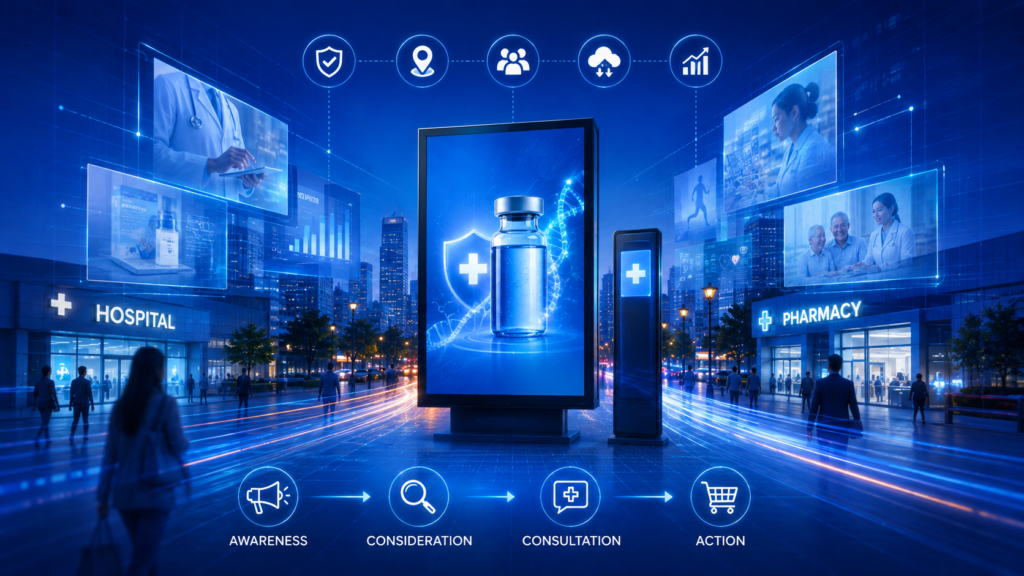
DOOH connects data, technology, and healthcare experiences in the real world.
The silent crisis and the rise of the real-world context
We are at a pivotal stage in the transformation of healthcare marketing. As online advertising algorithms face growing pressure from the disappearance of third-party cookies and increasingly stringent privacy regulations, an old medium with a new face is making a comeback: out-of-home (OOH) advertising.
The key factor lies in the wide-ranging regulatory enforcement initiative by the FDA and the U.S. Department of Health and Human Services (HHS), announced on September 9, 2025. The initiative directly targets direct-to-consumer (DTC) pharmaceutical advertising on social media and through influencers. As these traditional channels become increasingly risky and subject to strict regulatory scrutiny, OOH/DOOH is emerging as a safe “shelter from the storm,” allowing brands to maintain visibility without compromising patient privacy.
Breakthrough 1: “Immune” to the disappearance of cookies and ad blockers
The sustainability of digital out-of-home (DOOH) advertising lies in its ability to adapt to a future without personal data. Instead of tracking individual identities, DOOH relies on geographic location and environmental context to deliver messages.
In fact, according to data from Health Union, approximately 25% of paid advertising messages on digital platforms never reach users due to ad blockers. In contrast, OOH has an “unblockable” presence in the real world.
“OOH/DOOH advertising is always present and cannot be skipped. It exists in the physical spaces where people live and move, creating a resilient channel of reach that purely digital platforms cannot interfere with.”
Research from Nielsen shows that 82% of respondents recall seeing DOOH advertising in the previous month. For the pharmaceutical industry, this provides an answer to the challenge of maintaining consistent brand awareness amid an ever-changing digital ecosystem.
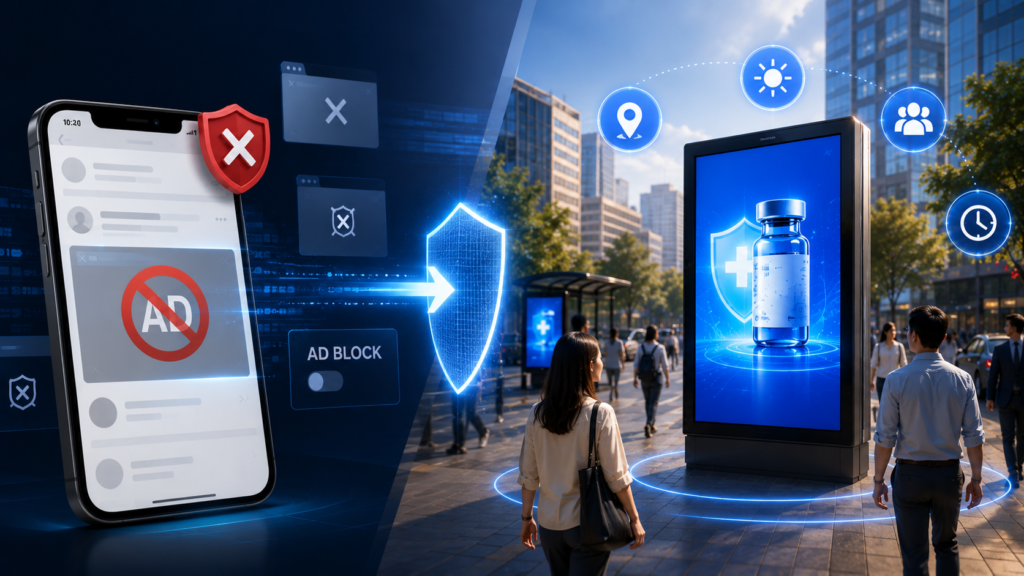
Impossible to block, DOOH helps the pharmaceutical industry maintain lasting brand awareness.
Breakthrough 2: Trust is the new currency in healthcare decisions
In healthcare, real-world contexts create a level of credibility that is difficult to replicate on a smartphone screen. According to a report from OAAA, patient trust is significantly strengthened through OOH:
- 45% of patients trust healthcare messaging more when a campaign includes OOH advertising.
- 84% of patients are more likely to discuss advertisements they see in healthcare settings with their doctors.
Appearing in locations such as hospitals, pharmacies, or medical centers is not simply a matter of placing an advertisement; it means leveraging “contextual endorsement.” A physical presence serves as a signal of legitimacy, which is especially important as patients become increasingly cautious about medical content that can easily be falsified on social media.
Breakthrough 3: When billboards can “think” and respond in real time
Programmatic digital out-of-home (pDOOH) advertising has introduced the ability to achieve “hyper-personalization” without compromising individual identities.
- Lasik MD campaign: A demonstration of the power of technology, using sensors in elevators to identify people wearing glasses and immediately change the advertising message.
- Environmental triggers: Pharmaceutical brands can now automatically display allergy medication advertisements when local pollen levels rise, or flu medication advertisements when real-time data indicates an outbreak.
This is how we can deliver useful healthcare information to the right people at the right time while maintaining strict privacy compliance.
Breakthrough 4: “Third Space” – The connective tissue of the experience
The concept of the “Third Space” from EMC Outdoor defines OOH as “connective tissue” between the conference environment (the First Space) and the digital mobile world (the Second Space).
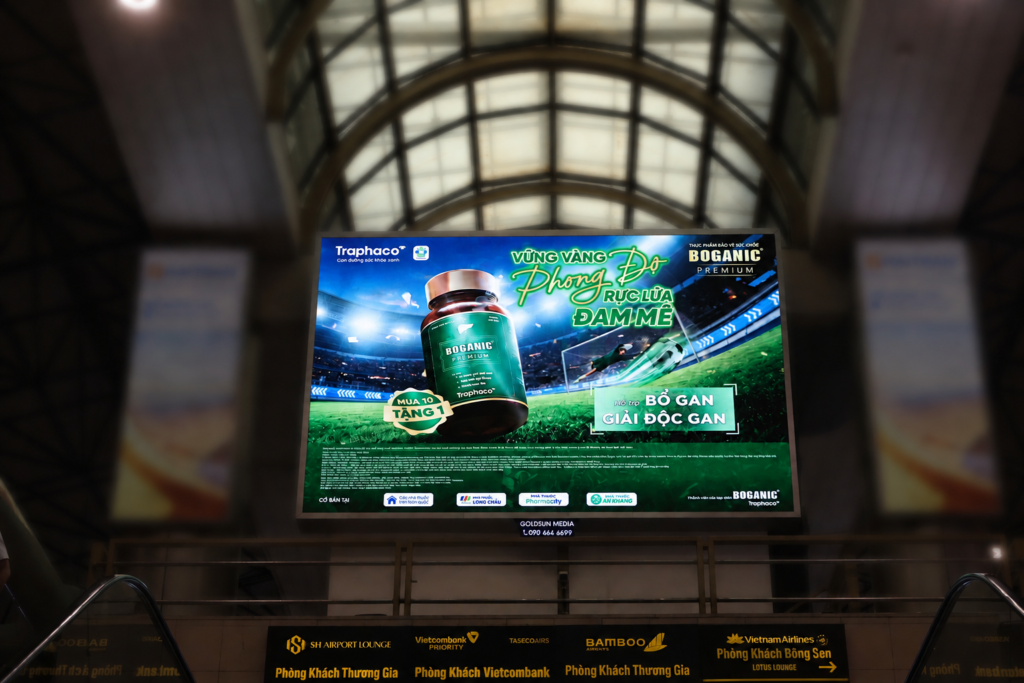
For campaigns targeting healthcare professionals (HCPs), securing strategic touchpoints is a key factor:
- Airport corridors and baggage claim areas: Reach HCPs as soon as they arrive in the event city.
- Hotel lobbies: Places where informal discussions and speakers’ breakfasts take place.
- Rideshare corridors: Maintain visibility throughout delegates’ journeys.
Owning the “Third Space” allows brands to build a seamless experience journey, transforming fragmented interactions into an overarching presence.
Breakthrough 5: Why algorithms are not enough – The lesson of compliance
In the pharmaceutical industry, excessive reliance on automated algorithms (Black Box) presents a significant risk. Algorithms are designed to optimize scale and cost efficiency, but they do not understand FDA regulations or Medical-Legal-Regulatory (MLR) processes.
An algorithm could inadvertently place an advertisement for a prescription drug next to inappropriate content at a “local moose lodge” rather than in a premium healthcare environment simply because it is cheaper. More dangerously, automation could cause important safety information (ISI) to be displayed at the wrong size, making it unreadable on smaller screens and resulting in serious regulatory compliance issues.
This is where human curation plays an important role. The healthcare industry requires absolute accuracy from the outset (Zero-error standard). Technology should serve strategy, not replace expert judgment when selecting brand-safe locations.
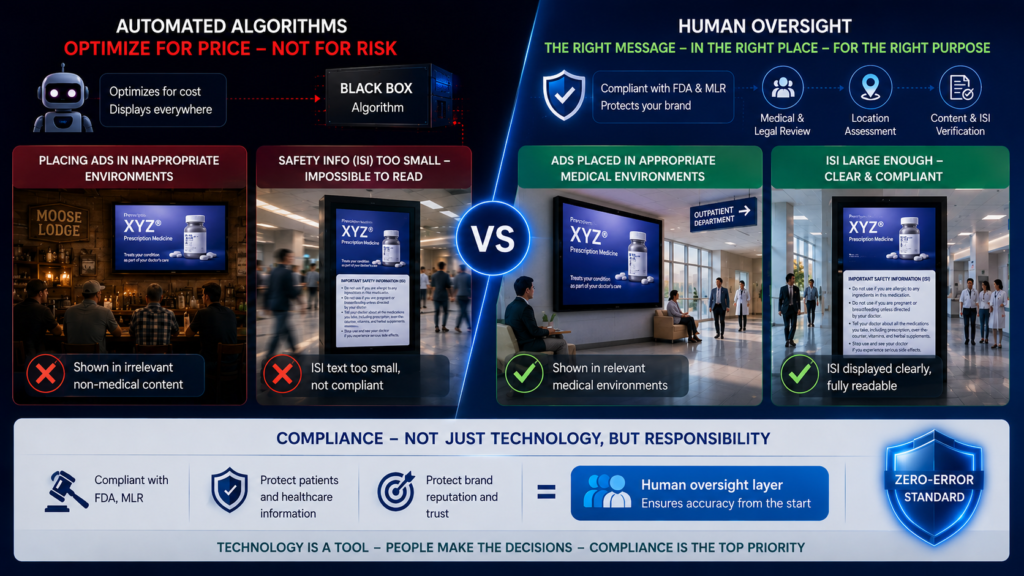
The pharmaceutical industry requires human oversight to avoid regulatory risks caused by automated algorithms.
Breakthrough 6: The OOH multiplier effect
OOH does not operate in isolation; it is a powerful catalyst. Data from Health Union shows that when DOOH is combined with other programmatic strategies, campaign reach can increase by up to 100%.
A notable example of ROI is Boehringer Ingelheim’s campaign for a veterinary product. By combining DOOH with QR codes at shopping malls and near pet stores, the campaign achieved:
- 254% increase in positive brand image.
- 105% increase in purchase consideration.
According to OAAA, 78% of viewers who saw pharmaceutical advertising on OOH took action. These actions included:
- Visiting the brand’s website via QR code or direct search.
- Searching for information about the product or medical condition on mobile devices.
- Discussing the product and seeking advice from doctors or pharmacists.
- Purchasing the product at the point of care.
Conclusion: The future lies at the intersection of data and reality
Healthcare marketing in 2026 requires a shift from “tracking” patients to “creating context.” OOH and DOOH are no longer outdated traditional media, but strategic tools that address the tension between strict regulations and the need to reach customers.
In the post-2025 FDA enforcement landscape, the question for brand managers is no longer how to follow patients through cookies, but rather: “Will you continue to intrude into risky personal digital spaces, or will you reach them through real-world value and credibility?”
The experience in the “Third Space” is where lasting healthcare trust can be built most effectively.
References
https://www.thedrum.com/industry-insight/pharma-finds-its-credibility-outdoors
https://emcoutdoor.com/healthcare-ooh-advertising-boutique-strategy-vs-algorithm/
https://www.bauermediaoutdoor.co.uk/advertising/new-to-out-of-home/a-guide-to-health-advertising
https://www.pharma-mkting.com/brand-positioning/ooh-strategy-for-pharma/
https://broadsign.com/blog/healthcare-pharma-brands-turn-to-digital-out-of-home-as-consumers-put-a-spotlight-on-well-being/