

Today, you can already see how fast global OOH shifts. This pace and changes are affecting your company’s whole marketing strategy.
Formats behave differently across regions, measurement is gaining sharper signals, and digital OOH advertising is reshaping how you plan scale at speed. These shifts influence how you allocate budget, structure creative, and align teams across markets.
Here, you’ll see which trends matter most for global OOH planning and how they shape decisions across markets. You’ll also get practical guidance to refine your next move.
But first, let’s look at why large brands continue to rely on OOH at global scale.
Why Global Brands Still Bet on OOH
Global brands continue to bet on OOH because it stays visible every hour of the day, even as other media channels face tighter privacy rules and weaker signal quality. OOH also scales cleanly across regions where digital billboards and transit networks already shape how people move through public spaces.
As a result, you get steady reach in markets where digital saturation limits attention. And it really works because billboards, transit ads, and street furniture sit in high-traffic paths and reach 96% of Americans weekly. This supports stronger brand recall without relying on clicks or impressions.
You can watch the video below for a sharp breakdown of how strong OOH creative really works:
What Makes OOH Work Worldwide
OOH works worldwide because it gives you steady reach in places where digital saturation weakens attention and limits signal quality. It also holds a clear advantage in urban spaces where movement patterns stay consistent across regions and formats behave predictably.
These strengths matter when you need to control reach while dealing with different rules around data use, privacy, and placement rights across markets. And because the medium is grounded in physical presence, its value doesn’t depend on browser settings, identifiers, or shifting platform policies.
Here are the factors that keep OOH effective at global scale:
- High visibility in crowded global cities.
- Trustworthy medium compared to online ads.
- Strong recall, especially with digital screens.
- Scalable for both local and international rollouts.
So once you look at these factors together, the next step is applying them across regions without losing consistency. Fieldtrip helps you carry these strengths across regions by aligning creative, media, and measurement inside one connected system.
Our team blends local insight with global strategy, so your placements hold together across languages, formats, and cultural expectations. This gives you a cleaner path to scale without losing control of message quality.
Now, let’s look at how OOH behaves across different global markets.
How Out-of-Home Advertising Works Across Global Markets
Global OOH doesn’t move at the same speed everywhere, and this affects how you plan reach, timing, and creative across regions. Some markets grow through large capital investments, while others depend on dense transit systems or rapid digital upgrades.
So to give you clearer context, here are the differences you need to factor in when you compare regions side by side.
| Region | Key Strengths | Notable Growth Signals |
|---|---|---|
| US | Large spend, mature DOOH, established landmark placements | 34% digital share and rising. Market at $9.38B today and projected to reach $11.25B by 2030. |
| China | Fast DOOH adoption, extensive LED networks | $2.34B in 2024, expected to reach $4.73B by 2030. |
| LATAM | Rapid digital growth, smart-city expansion, consistent double-digit DOOH gains | $340.7M in 2024, projected to reach $580.1M by 2030. |
| EU | Strong transport systems, high-value digital sites, advanced measurement practices and sustainability focus | Currently $10.58B and projected to reach $13.19B by 2030. |
| APAC | Dense cities, strong mobile behavior, tight DOOH integration | $6.89B in 2024, projected to reach $13.69B by 2030. |
With this context set, let’s break down the major trends shaping how global OOH evolves.
Top 9 Trends Shaping Out-of-Home Advertising for Global Campaigns
Global OOH is shifting faster than most planning cycles can keep up with, and these shifts directly affect how you build reach, measure lift, and coordinate markets.
Now, to ground your strategy in what actually changes execution at scale, here are the trends shaping how you plan and run international OOH today.
1. AI-Driven Campaign Planning and Targeting
AI now influences your planning process by shaping where screens activate, how frequently they appear, and how messaging adjusts throughout the day.
It strengthens audience targeting by combining movement patterns, weather conditions, and site-level signals that help you time your placements with higher confidence. This matters more as identifiers fade and you need stronger logic behind every activation.
Artificial intelligence also improves planning cycles that once relied on slow historical inputs. As a result, you get earlier visibility into which markets need heavier support and which sites behave like outliers. The markets with the fastest DOOH adoption tend to be the ones where AI-driven planning gains the most traction.
A recent Forbes article citing Shiv Singh, the author of AI Marketing for Dummies, explains further:

And all this can push your engagement rates up by 30%.
2. Programmatic DOOH Becomes Mainstream
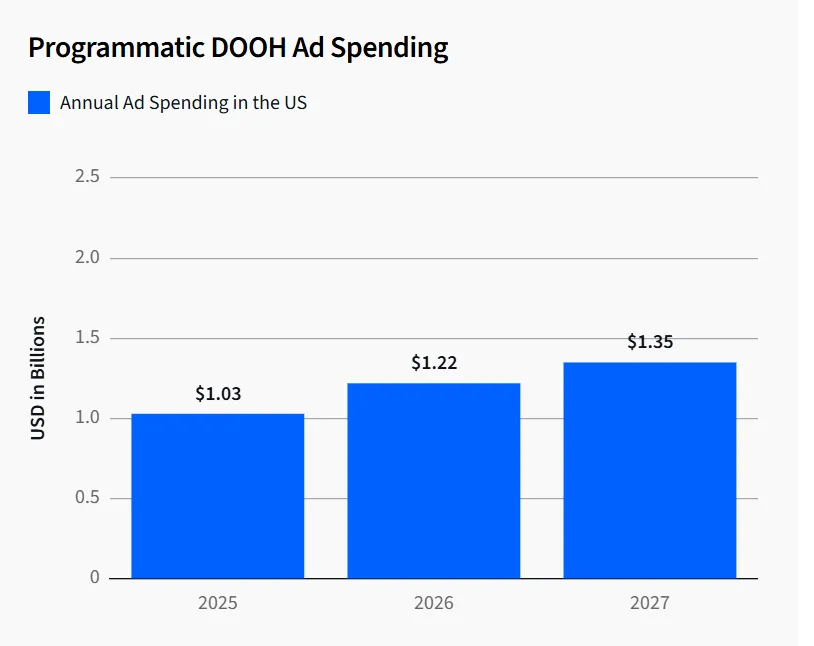
Programmatic buying is now the default in high-volume markets.
This tactic removes negotiation cycles that slow down global alignment and gives you clearer control over pacing across markets and channels. And because programmatic DOOH runs through the same planning logic used in digital, you can reallocate spend faster instead of waiting for slower booking cycles.
Screens in major cities already lean heavily on automation, especially where buyers want flexible timing without losing reach. It also makes it easier to compare markets and redirect volume based on live conditions.
This trend accelerates as teams connect more screens to demand-side platforms, so we’re looking at a potential 22.6% YoY growth.
3. Retail Media + In-Store DOOH Integration
Retail media now plays a bigger role in your planning because in-store screens sit closer to purchase decisions than almost any other placement. They help you influence buyers at moments where intent is easier to read. And because these screens use digital displays, you gain faster testing cycles and cleaner attribution.
Retail growth also matters for global planning because measurement models inside retail media networks usually feed stronger location signals back into your OOH mix. So, the more these networks expand, the more visibility you get into what people do before and after exposure.
As a supporting data point, GroupM expects global retail-media revenue to reach $176.9B in 2025 while passing TV for the first time.
That shift shows how much weight retail environments now carry inside advertising campaigns.
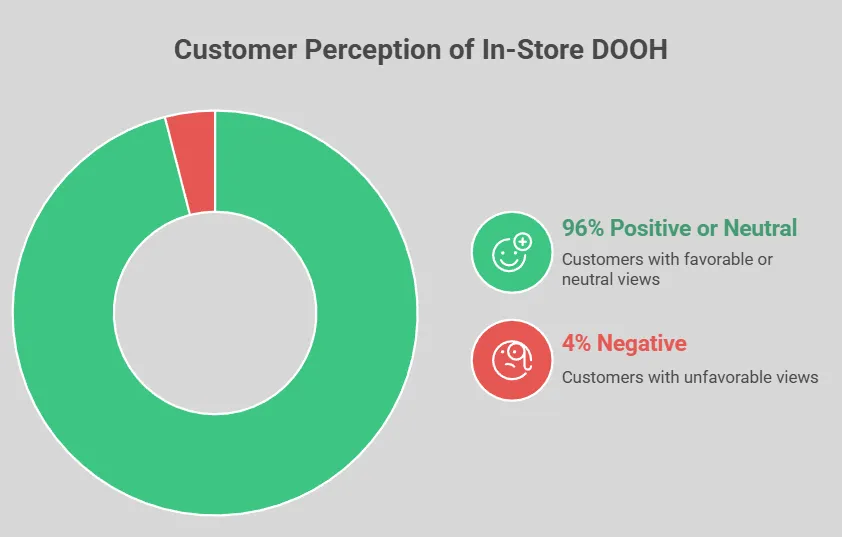
After all, people like it: 96% of customers view in-store DOOH positively or neutrally, even though 70% of people dislike digital advertising.
4. Growth of Immersive Formats: AR, 3D, Experiential OOH
Immersive formats now reshape how you plan story arcs across markets. They work because they break the patterns people expect from outdoor advertising, especially in cities where visual clutter is high.
Teams use 3D builds, AR layers, and short-run installations to create moments that feel new in places that rarely change. And once these assets circulate online, they add pressure for other brands to raise their creative standards.
So the value goes beyond impact on the street. It extends into social distribution where people share the moment and widen your footprint.
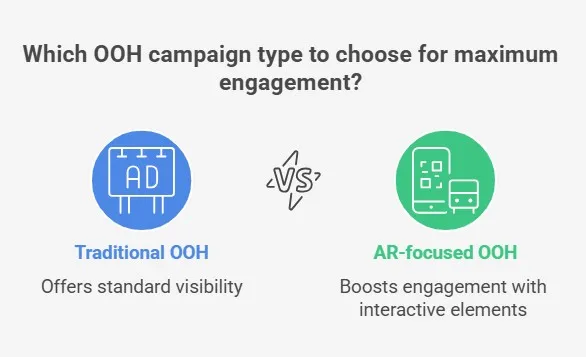
The impact shows up in performance data, with AR-focused OOH campaigns driving engagement spikes of up to 300%. That doesn’t replace traditional formats, but it changes the creative playbook when you launch in cities with tight competition for attention.
5. Attention Metrics Become the Standard
The shift from impressions to attention changes how you justify spend across markets.
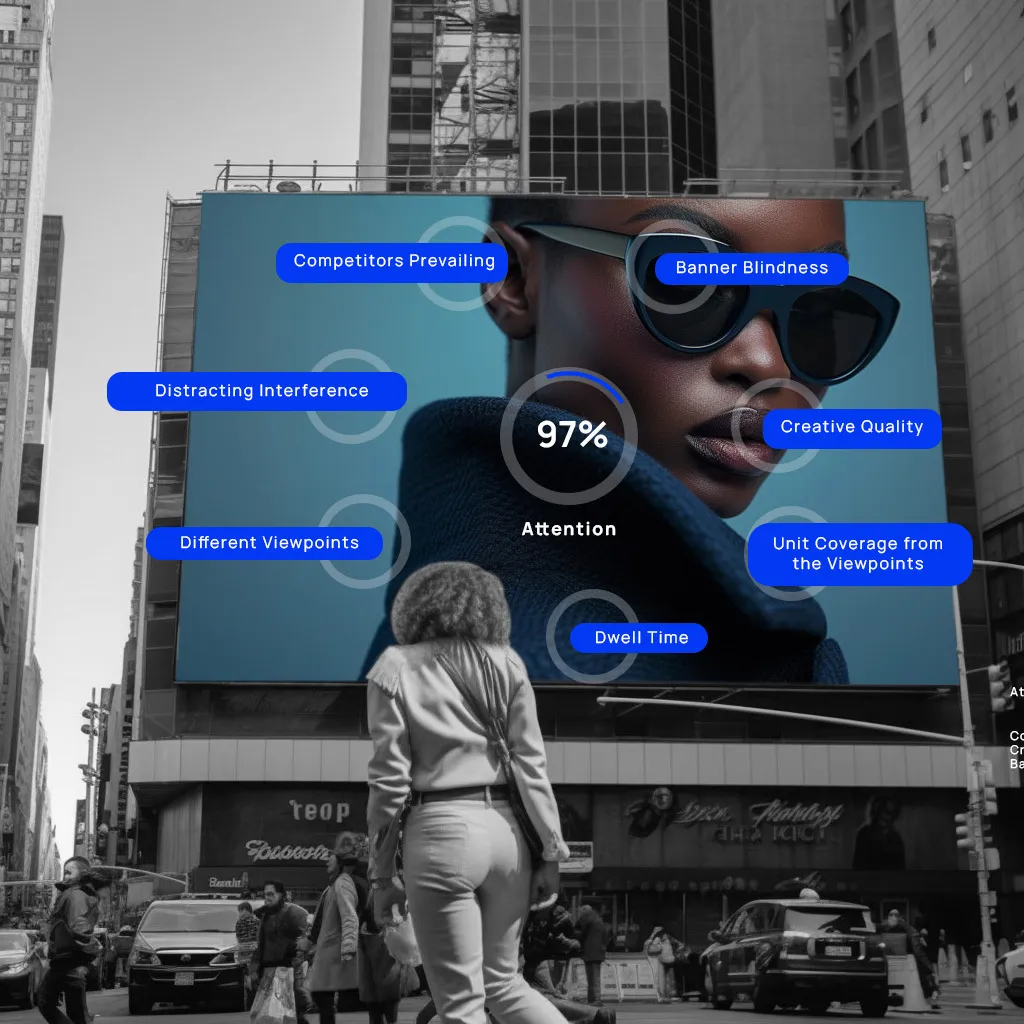
Instead of relying on raw volume, you now have access to stronger signals built from dwell time, motion patterns, and sensor data. And because attention is harder to inflate than exposure, it gives you better footing when you defend global budgets to finance or strategy teams.
More tools now combine mobility signals with real-time data analytics. This can help you understand which placements hold the longest gaze and which ones overperform relative to their cost.
For example, here’s how Billups’ OTE patented technology works:
Normally, this shift also supports stronger campaign performance benchmarks across markets that behave very differently.
6. Sustainability as a Global Priority
Sustainability now affects placement decisions, especially where local rules push brands to justify the impact of physical infrastructure.
More screens run on renewable energy, and more vendors recycle printed materials to avoid unnecessary waste. But the real shift is strategic because buyers now ask for clear evidence that your OOH plan aligns with their broader environmental goals.
So even if sustainability doesn’t change where you place creative, it still shapes which partners you rely on. And because clients compare global markets, the brands that use sustainable marketing strategies can defend their footprint more effectively in regions facing stricter policies.
7. Rise of Emerging Environments: EV Charging Networks
EV charging screens add new value to your plan because they sit in places where dwell time is built in.
They also serve people who usually have a higher willingness to spend, which makes the placements relevant for launches and conversion-focused campaigns. And because these screens use the same digital inventory infrastructure as other DOOH sites, they integrate smoothly into your buying systems.
But you don’t have to take our word for it. Check out the data that supports this.
According to eMarketer, seven in ten EV drivers shop nearby while their vehicle charges, and 80% of them make a purchase. Plus, 47% use their phones during that window.
Basically, leveraging this trend helps you close the gap between physical exposure and digital action. As such, you get cleaner paths to mobile or app-based engagement.
8. Mobile + DOOH Sync Drives Engagement
Mobile and OOH now work together far more frequently, especially when you run time-sensitive messaging. In fact, 74% of people will take action on their mobiles after seeing your DOOH ad.
So, make sure your DOOH triggers actions such as QR codes, app opens, and store lookups, which helps you connect the offline moment with the next step in the consumer journey. And because more regions support mobile retargeting, you can align your story across OOH, mobile, and CTV without losing sequence.
This matters for global planning because behaviors differ by region.
Some markets engage more with QR, while others respond to nearby store prompts or context-based messages. With better integration, you can adjust those differences without rewriting the entire plan.
9. Faux OOH (FOOH) and the Rise of CGI-Driven Creativity
FOOH changes how your teams think about creative risk. It gives you room to test ideas without the long build cycles of physical installations. And because the content spreads fast through social channels, it helps new products or rebrands gain reach before your physical placements even launch.
Here’s a good example from phone company Vodafone in Germany:
Still, you need careful framing. CGI scenes raise questions about authenticity if the viewer expects the asset to exist in a real location. So, the most effective brands use FOOH as a complement (not a replacement) by pairing CGI moments with real placements or real OOH media assets in key launch markets.
All of this takes us to how you adapt OOH to local conditions.
How Global Brands Can Adapt OOH for Local Markets
Global rollouts always meet local behavior, and that gap can change how your message performs across regions. Some markets reward bold creative. Meanwhile, others respond better to structured sequencing and targeted messaging driven by stronger audience data.
Here are the factors you need to work through as you adjust your plan for each location:
- Cultural nuances: Values, humor, colors, and social norms vary by region, which means the same message can land differently across cities that look similar on paper. You protect brand perception by matching visuals, tone, and calls to action to how people actually respond in that market.
- Language adaptations: Direct translation rarely captures context. You typically need edits to phrasing, pacing, and reading flow so the message feels natural to people passing by at speed.
- Local mobility patterns: Movement paths vary by city structure. Some audiences move through transit hubs, while others rely on cars or walk dense corridors. These patterns guide placement decisions and shape the logic behind your spend.
- Legal regulations: Each region sets different rules around data use, brightness levels, scheduling, and placement rights. A clear plan helps you stay compliant without slowing down production or buying cycles.
Next, let’s discuss the breakdown of the formats that carry global reach most effectively.
Out-of-Home Advertising Formats That Drive Global Scale
Scaling OOH across regions works best when you match each market’s movement patterns with formats built for high reach. Some formats carry predictable volume, while others help you shape moments that push people to engage or share.
Here are the core formats you can rely on when planning multi-market rollouts:
- Large-format DOOH: High-impact placements used to anchor visibility across key corridors and major roadside advertising routes.
- Transit OOH (metros, airports, rail): Creates dense reach inside any public transit system, especially in cities where most people move through the same hubs each day.
- Street furniture: Short-range placements for consistency across neighborhoods and commuter paths.
- Retail screens: Support brand choice inside stores and influence purchases closer to decision points.
- Sports event screens: Connect your message with large crowds and time-bound cultural moments.
- Experiential pop-ups: Short-term builds that help you test new creative or spark online distribution.
- 3D + AR billboards: Bring extra attention in high-traffic areas of the urban outdoor environment.
Now that these core formats are clear, the next step is choosing which markets make the most sense for your global plan.
How to Choose the Right Markets for Global Out-of-Home Campaigns
Market selection shapes how effectively your OOH plan performs across regions, especially when formats, movement patterns, and rules differ by country. Some markets reward high-impact builds, while others depend on transit reach or citywide repetition.
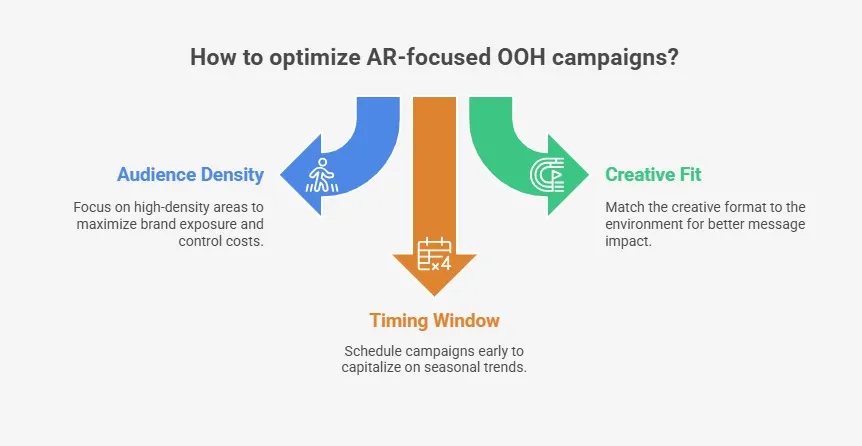
So, here are the core factors you need to evaluate through the ACT framework.
A: Audience Density
Start with where people move. High-density corridors drive stronger brand exposure and help you control cost per reach. Cities with predictable flows (especially those mapped through geospatial data analysis) give you cleaner logic when matching placements to demand patterns.
C: Creative Fit
Next, consider how well your message fits the environment. Some creative works best on large surfaces, while other stories land better on static panels, transit sites, or niche installations. The key is matching format and pacing to the visual noise and cultural expectations of that location.
T: Timing Window
Finally, timing changes how quickly your message gains traction. Campaigns tied to events or seasonal peaks usually require earlier booking cycles. And this creates a planning gap: scheduling static campaigns six-eight weeks ahead of major holidays supports stronger performance when spending rises.
Budgeting for International Out-of-Home Advertising Campaigns
Budget planning shapes how far your message can travel across regions, and small choices early on can limit your options later. Some markets demand higher entry costs, while others reward flexible spending or faster rotation cycles.
Here are the budgeting steps you can use to keep control across all markets:
- Start with core cities: Anchor your spend in places where movement patterns and visibility stay consistent, then build outward.
- Layer DOOH + mobile retargeting: Strengthen reach by pairing screen exposure with mobile follow-ups that guide the next step.
- Use programmatic for flexible expansion: Shift weight between markets without waiting for long booking cycles or manual changes.
- Reserve funds for testing creative: Set aside budget to trial formats, motion styles, or new copy before scaling.
- Keep 10-15% for local adaptations: Adjust language, pacing, and placement decisions so the message fits local expectations.
How to Measure Global OOH Advertising Performance
Strong measurement helps you compare regions, defend budgets, and decide where to shift weight next. Some indicators show how people move after exposure, while others help you link offline moments with digital behavior.
Here are the signals that matter most when you evaluate global OOH:
- Foot traffic lift: Measures how exposure affects movement toward stores, events, or key locations.
- Store visitation: Tracks how many exposed customers enter specific sites compared to a baseline.
- Social amplification: Shows how creative spreads online, especially for formats that encourage sharing.
- QR scans: Connect physical placements with direct actions and reveal which messages drive engagement.
- Attention metrics: Use dwell time and gaze patterns to show how long people focus on the asset.
- Cross-channel attribution: Helps you match exposure with actions across mobile, CTV, or web activity.
By Tereza – Fieldtrip Agency